Self Driving Robot Car Wars Come to London Again
Posted by James Ruppert | Oct 22, 2025 | Articles, Bangernomics, Robot Car Wars, Self Driving Cars
Just in case you wondered what happened to all those Jaguar I-Paces, well it seems that Waymo are planning to bring a few to London as part of a small fleet in 2026.
(Please note that self driving cars in London is nothing new, fast forward to the end of this article for links to really old Free Car Mag stories from 2016 and 2017. I mean that all went a bit quiet didn’t it? Maybe they didn’t know what they were doing.)
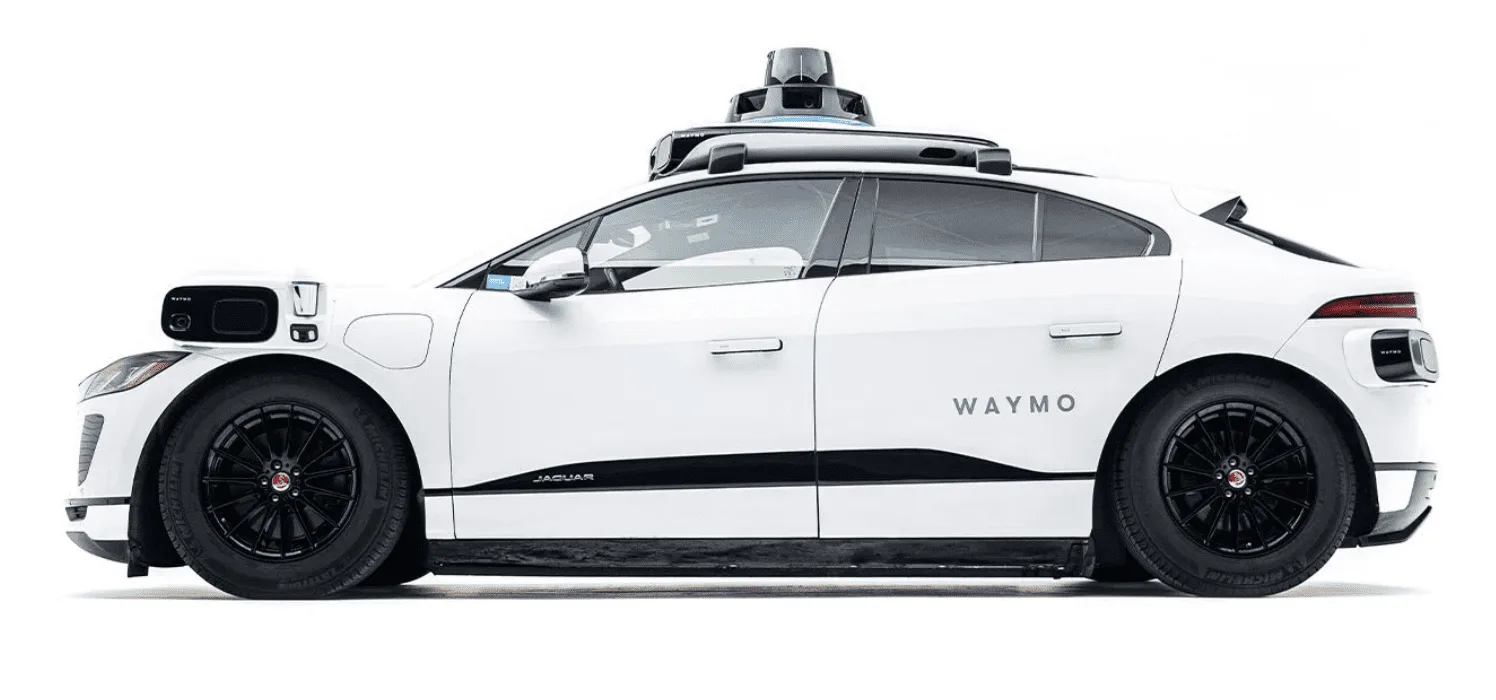
Self driving taxis already exist in SanFranciso, have done for some time and have recently hit the road in Tokyo and Waymo claim to have taken more than 10 million passengers safely to their destinations. London will be the first European city to get the driverless taxis as Waymo work with both the Department for Transport and Transport for London to in their words “secure the necessary permissions to offer fully autonomous rides in 2026”.
Those permissions are contingent on the government finalising driverless car regulations and giving Waymo the go-ahead to operate. Not only that, Uber and UK company Wayve are also planning to trial driverless taxis in the capital next year.
Waymo’s UK launch will begin with a small fleet of human-supervised vehicles, moving to fully autonomous operations by 2026 and it will be supported by fleet operations partner called Moove.
So what’s the deal for us? Even if we don’t live in London. Well this is the culmination of several years of government activity in this particular area. Back in June of this year Transport Secretary Heidi Alexander confirmed that the government will fast-track pilots to spring 2026, introducing self-driving commercial pilots on England’s roads. Firms will be able to pilot small scale ‘taxi- and bus-like’ services without a safety driver for the first time – which could be available to members of the public to book via an app – before a potential wider rollout when the full Automated Vehicles Act becomes law from the second half of 2027.
According to Heidi Alexander “The future of transport is arriving. Self-driving cars could bring jobs, investment, and the opportunity for the UK to be among the world-leaders in new technology. With road safety at the heart of our pilots and legislation, we continue to take bold steps to create jobs, back British industry, and drive innovation to deliver our Plan for Change.”
It will be interesting to see how it is possible to create more jobs (38,000) by taking them out of the driving seat. The government also used their normal buzz word bollocks to justify all this, apart from the jobs it is to “put money in the pockets of hardworking people, driving investment to back British engineering excellence and creating an industry worth £42 billion by 2035.” No details as to just how this might be achieved of course.
Here is a warning though, the government statement at the time included this sentence,
“Innovation, world-leading regulation and road safety will be at the forefront of the pilots, with self-driving vehicles aiming to reduce human error – which contributes to 88% of all road collisions.”
To those of us that suggested governments have been rather keen on stopping us driving altogether, this is a hint as to the way things could possibly go. Essentially, they will stop you driving for your own safety. Still don’t believe me, well here is some more justification for stopping you ever getting behind the wheel ever again.
Interestingly the Government calls Heidi ‘The Automated Vehicles Transport Secretary’ which I thought was interesting. Anyway, here’s what she said about the upcoming legislation: “(The) Act will require self-driving vehicles to achieve a level of safety at least as high as competent and careful human drivers, and they will undergo rigorous safety tests before being allowed on our roads.
“By having faster reaction times than humans, and by being trained on large numbers of driving scenarios, including learning from real-world incidents, self-driving vehicles can help reduce deaths and injuries. Unlike human drivers, AVs (Automated Vehicles) can never get distracted or tired and they won’t drink-drive or speed.
“Self-driving vehicles can also improve transport for millions of people – providing greater choice and flexibility to get around more easily. They could add new public transport options in rural areas to boost connectivity for local communities, and improve mobility, accessibility and independence for those unable to drive.”
There can be some truth in that old people stranded in the middle of the countryside, where there are buses, could benefit from this sort of taxi. Would it be any cheaper than a local firm? That friendly local man/woman with a Skoda Octavia though is always so helpful. Puts the wheelchair in the boot. Makes sure the old dear gets home. These are real concerns and that’s without noticing safety concerns about unaccompanied young or vulnerable people.
Then there is Technology Secretary Peter Kyle, who like everyone these days, is obsessed by AI and how it will make our lives immeasurably better. Without of course explaining exactly how, except that it will be easier and cheaper. Anyway, back to Mr. Kyle, “We can’t afford to take a back seat on AI, unless it’s on a self-driving bus. It’s great to see the UK storming ahead as a global leader in using this technology – making our roads safer, travel easier and driving growth by spurring innovation across the country.”
I wonder where they would have got these sort of ideas from? Popping along to the world Ecommunist (actually Economic) Forum is always good when it comes to this sort of thing. Here is the link if you want to go there.
https://reports.weforum.org/docs/WEF_Autonomous_Vehicles_2025.pdf
I have though a very simple breakdown of what that organisation says about AVs. They consider private vehicles, robotaxis and autonomous trucks. They reckon we might well be driving assisted vehicles, rather than fully autonomous ones. So all those beeps and bongs from the driver assistance aids are going to get even louder. Meanwhile, large-scale robotaxi deployments will remain limited to select global cities over the next decade, please see previously of what’s coming to a capital city, possibly not near you. It seems that the biggest bucks will be in the autonomous trucks business, particularly for long-haul and mid-distance hub-to-hub routes, those HGV driver shortages solved at a stroke and a microchip.
The worrying bit are their conclusions. According to them advances in vehicle autonomy offer not only greater efficiency and convenience but, most critically, the potential to significantly reduce road accidents, what they call ‘a pressing global problem’ that claims 1.2 million lives annually. There we are back to safety and for the greater good.
Car companies are all on board with this. Stellantis are ponying up with Pony.ai to go down the Robotaxi route. They are using Pony.ai’s advanced autonomous driving software then combining that with the Stellantis Groups medium-size van (K0) AV-Ready Platform -battery version. These companies plan to begin deploying test vehicles based on the Peugeot e-Traveller model in Luxembourg in the coming months, followed by a gradual rollout across European cities starting in 2026.
Well, there is potentially your eight seat Robotaxi, coming to an urban area near you soon.
According to Waymo, they’ve “been building ‘the world’s most experienced driver’ which according to them is a safe, skilful and savvy chauffeur that can take people and things from A to B at the push of a button. Imagine a world where you can take a self-driving minivan to the baseball game (like cricket, but dreadfully boring, well basically it is rounders) family, and a self-driving I-PACE home after a night out — in both cases, a car perfectly suited for your needs. That’s the world we’re building”.
Driving is dead is confirmed by Waymo. It’s purely a data ‘driven’ exercise no and no surprise that it is a company which is part of the Alphabet group and ultimately Google.
Is this a world you really want to live, but not drive in?
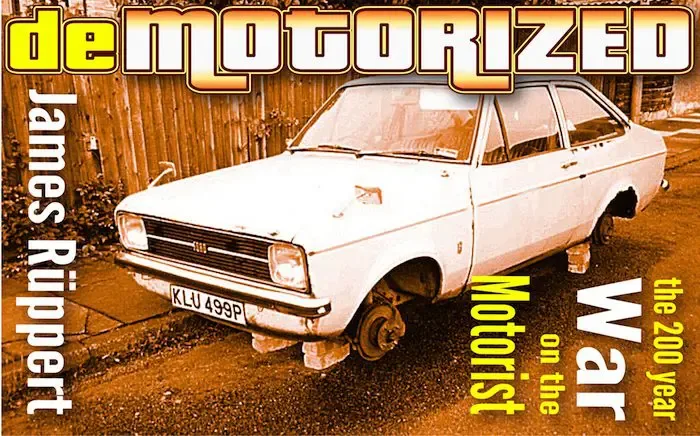
(Also if you would like a brief history of self driving cars and why it wasn’t working a few years ago then there is a very interesting chapter in this book which you should go and buy.)
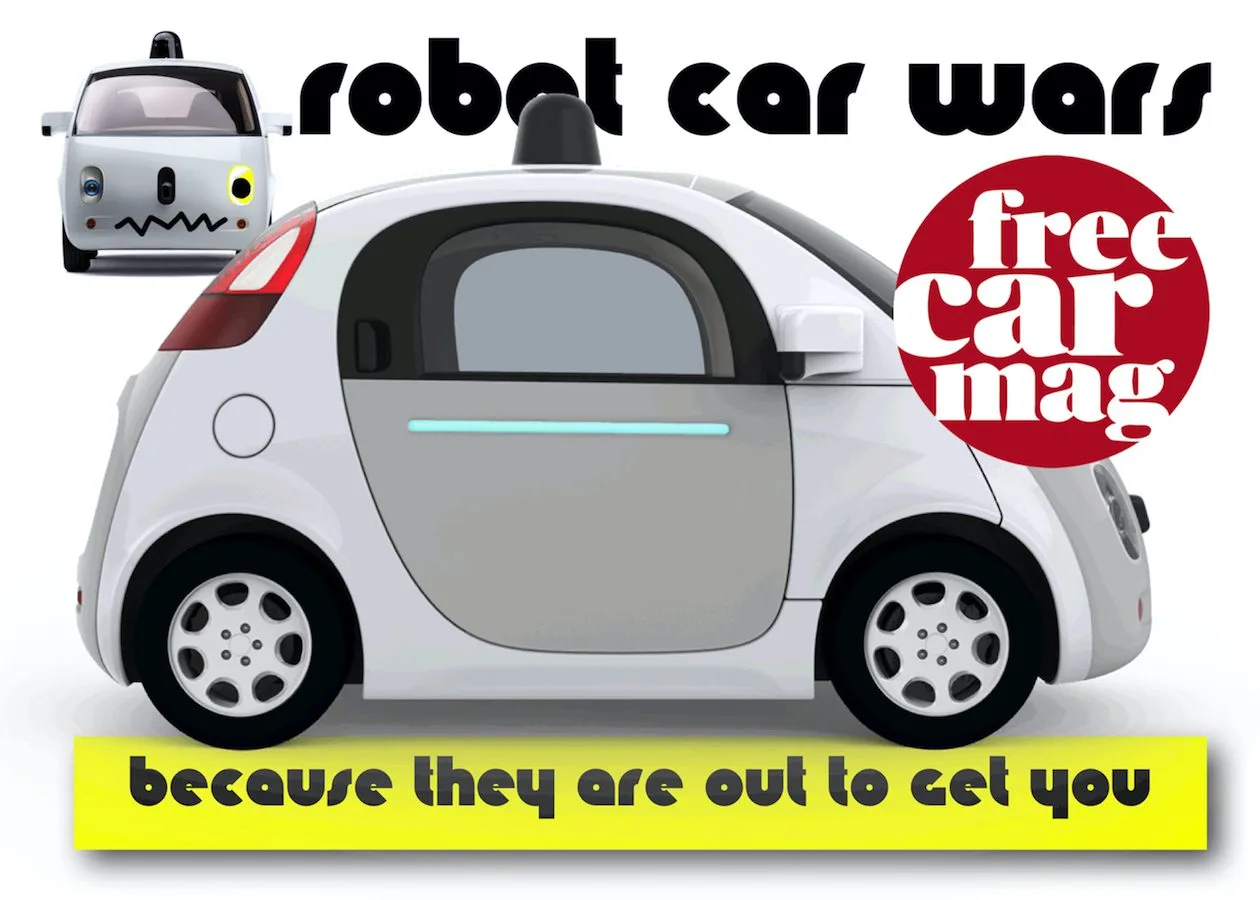
Robot Cars are nothing new. As is often the case with news stories I always rush off to the Free Car Mag archive and what do you know in 2016 and 2017, self driving cars were all the rage. We loads of stories about what was going on at the time. There are self-driving UBERs, Nissans and Land Rovers and there are exciting videos you can watch too.
https://www.freecarmag.com/san-francisco-your-self-driving-uber-is-arriving-now-dont-panic
https://www.freecarmag.com/self-driving-jaguar-and-land-rovers-now-on-uk-roads
https://www.freecarmag.com/be-afriad-nissan-conducts-on-road-autonomous-vehicle-testing-in-london
That Magazine Cover Image.
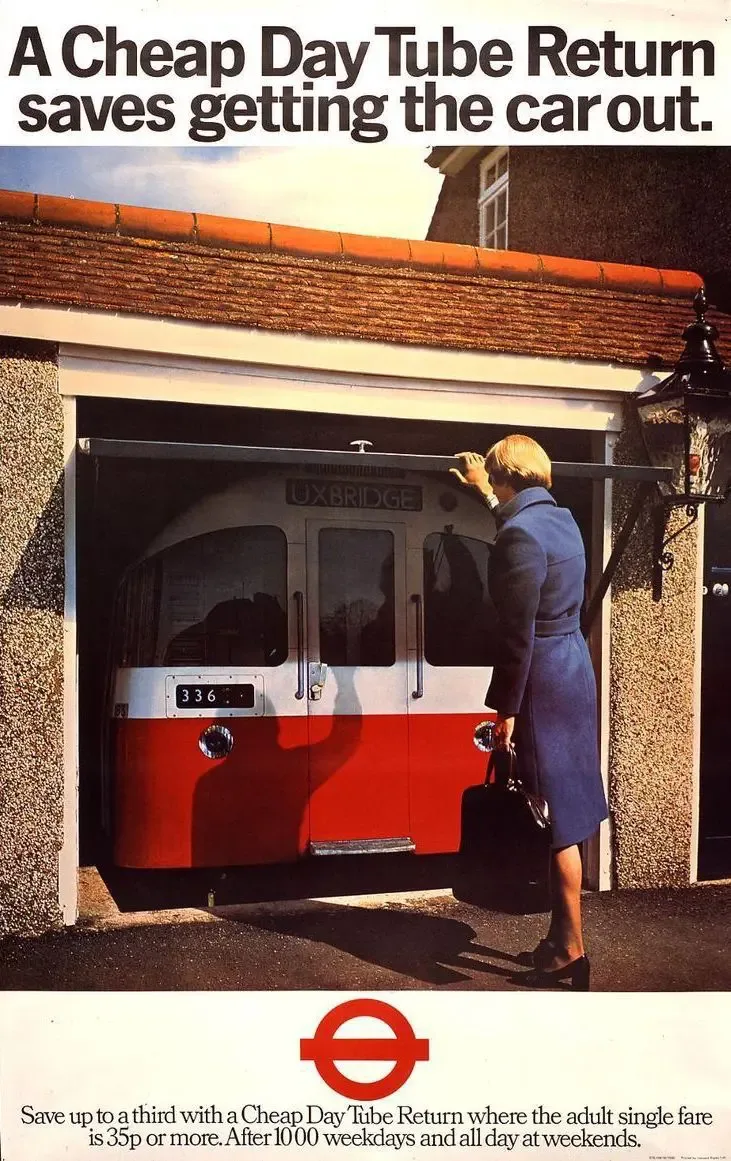
Well I like it. This is a time when London Transport knew how to do clever, informative and engaging advertising. So I popped it on the cover, but is that a confusing message? Well, when it comes to self driving anything, put them on rails and technically that’s possible. See further the Dockland Light Railway. Unless that is you have a very strong Trades Union and a weak government, then you are on £71,160 for starters, rising to £77,692 by April 2027. The point is though a self-driving tube train in your garage would be terribly convenient, provided you are directly connected to your local underground line of course.