Protecting Auto Mechanics From Workshop Air Pollution
Posted by James Ruppert | Nov 12, 2026 | Workwear, Health and Safety, Fresh Air
A repair bay is a small, busy space. Engines run, metal gets cut and cleaners get sprayed. All of it goes into the air that your technicians breathe for eight hours or more.
Most shops treat air quality as an afterthought. That is a mistake. Poor air affects health, focus and staff retention.
What Mechanics Breathe Every Day
Several contaminants show up in almost every shop:
-
Diesel and gasoline exhaust, including carbon monoxide and fine particles
-
Brake and clutch dust
-
Welding fumes with metals like manganese, nickel and chromium
-
Solvent vapors from brake cleaners and degreasers
-
Sanding dust and paint mist
-
Oil mist from air tools and engines
Each one behaves differently. Particles stay airborne and settle deep in the lungs. Vapors pass through filters that only catch dust. Gases like carbon monoxide need dilution or direct removal.
Where the Exposure Peaks
Engine idling is the most common source. A cold start in a closed bay releases a dense plume. Loose fittings between tailpipes and exhaust hoses make it worse. NIOSH found this problem in a bus maintenance shop, where poor hose connections let diesel exhaust into the work area.
Brake work is another peak. Modern pads are mostly asbestos-free, but the dust is still fine and irritating. Blowing it off with compressed air spreads it across the shop.
Welding creates fume that rises into the breathing zone. When chromium-bearing metals are heated, they can form hexavalent chromium. That compound is a known carcinogen.
Solvents matter too. NIOSH flagged brake cleaners containing tetrachloroethylene, a potential carcinogen, in the same bus shop study.
Why Open Doors Are Not Enough
Many owners rely on a roll-up door and a fan. That moves air around. It does not remove contaminants.
Fine particles can stay suspended for hours. A fan may only push them toward the next bay or back into a breathing zone. Winter makes it worse, because doors stay shut.
A properly sized industrial air purifier changes the picture. It pulls in contaminated air, filters it and returns clean air to the room. It works continuously, not only when someone remembers to open a door. For shops with welding, grinding or heavy exhaust, it is a core part of the ventilation plan.
Capture the Source First
Filtration works best after source capture. Stop the contaminant before it spreads.
Use these controls where they apply:
-
Tailpipe extraction hoses with tight, sealed connections
-
Hoses long enough to reach outdoors
-
Fume extraction arms at each welding station
-
Vacuum-attached sanders with built-in dust collection
-
HEPA vacuums for brake dust, never compressed air
-
Parts washers with lids that stay closed
Check the hardware often. Hoses crack and clamps loosen. A small gap can undo the whole system.
Match Filtration to the Contaminant
One filter does not fit every hazard. Pick the media for what you actually produce.
HEPA filters capture fine particles such as brake dust, welding fume and sanding dust. Activated carbon adsorbs solvent vapors and odors. Pre-filters catch larger debris and extend the life of the main filter. Oil mist often needs a coalescing stage.
Sizing matters as much as media. Calculate the room volume and the air changes needed per hour. A unit that is too small will run constantly and still miss the target. Place units where airflow carries contaminants away from the technician, not past the face.
Respirators Are the Last Layer
Personal protection still has a role. It should not be the first line of defense.
OSHA sets the order in its respiratory protection standard. Employers must use feasible engineering controls as the main way to control air contaminants. Respirators apply when those controls are not feasible, or while they are being put in place. The agency lays this out in its summary of the major requirements of 29 CFR 1910.134.
If your shop uses respirators, the program needs:
-
A written plan and a named program administrator
-
Medical evaluation before use
-
Annual fit testing for tight-fitting masks
-
NIOSH-certified respirators matched to the hazard
-
Yearly training
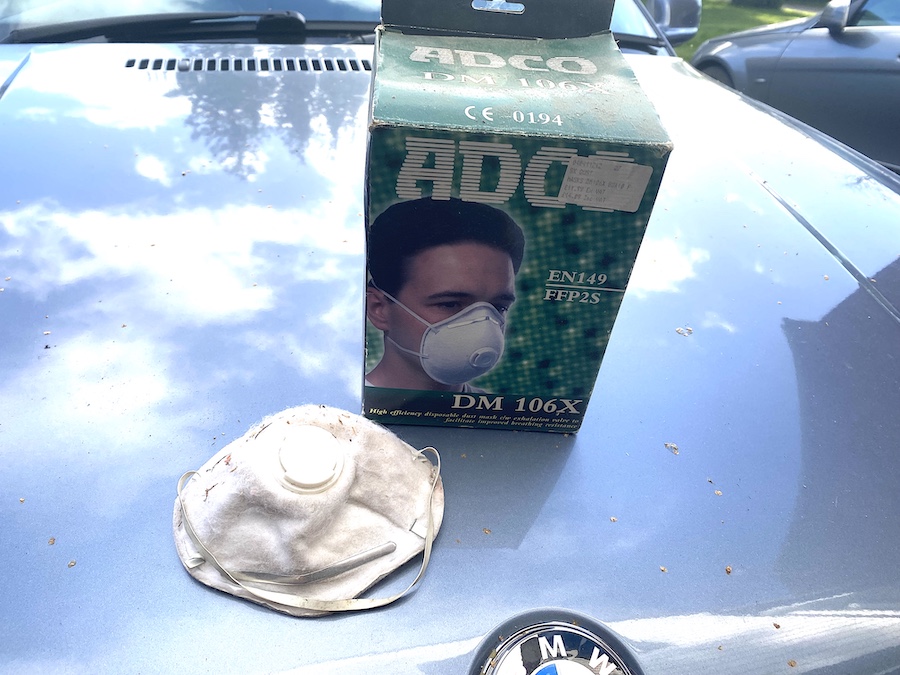
A paper dust mask does not meet this bar for hazardous exposures. It also gives a false sense of safety.
Monitor and Maintain
Good systems fail when nobody checks them. Build a simple routine.
Test carbon monoxide levels where engines idle. OSHA’s permissible limit is 50 ppm as an eight-hour average. Use personal air sampling when welding or spraying becomes frequent. Track filter pressure drop and replace media on schedule. Log every inspection.
Ask technicians for feedback. Headaches, coughing, eye irritation and odors are early signals. They often show up before any measurement does.
Build a Layered Plan
Clean shop air is not one purchase. It is a stack of controls that work together.
Start with source capture. Add filtration sized for the room. Keep respirators for tasks that still need them. Measure results and adjust.
Shops that do this well protect their people and cut downtime. They also avoid citations and the cost of replacing a skilled mechanic.