
What a Floor Plate Changes About Daily Work Around a Two Post Car Hoist
Posted by James Ruppert | Nov 27, 2026 | Car Hoist, Workshop, Truck
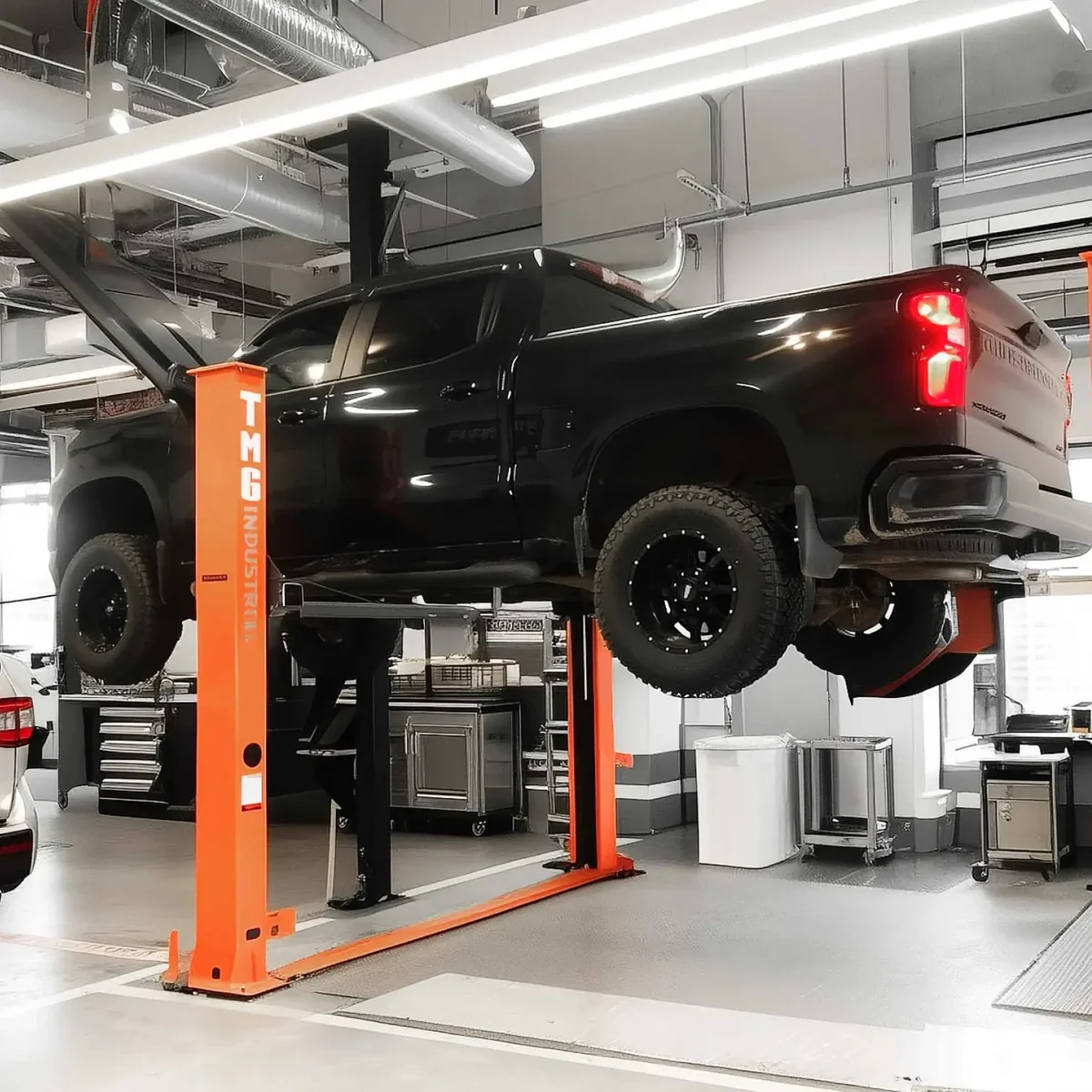
Home garages and small repair bays across Canada get busy as winter approaches, and ceiling height often decides which equipment will fit. A two-post auto lift with a floor plate joins its columns along the ground instead of across the top. That removes the overhead beam, but it places something new where people walk, roll tools, and park.
What the Low Plate Is Actually Protecting
On a 2 post lift with this layout, the plate covers items running between the two columns, such as steel cables, a hydraulic hose, or wiring. The cables help the two carriages move together. With nothing crossing overhead, a tall vehicle is limited mainly by the ceiling, doors, lights, and column design, so those clearances still need measuring.
The cover is a guard, so keep it fitted as the manufacturer directs. A dented, loose, or shifted section deserves attention before the next lift. Do not drill, weld, or screw anything to it without approval.
Driving a Vehicle Over the Raised Strip
Tires have to cross the plate during positioning. Before the vehicle enters, swing the car hoist arms fully out of the path. Approach slowly and squarely, with a spotter who stands to one side and never between a moving vehicle and a column. Low bumpers, air dams, and running boards may sit close to the edge. Check clearance before rolling forward, especially on lowered vehicles.
A smooth stop also matters because the vehicle must finish in the position its weight balance requires. Set the arms and pads only after it is parked, using the lift points in the vehicle service information.
Rolling a Transmission Jack Across the Plate
Small casters can stop sharply against a raised edge. A loaded transmission jack or drain pan may then jolt, tip, or spill. Plan the work so heavy items can be lowered and moved without crossing the strip. Use a crossing ramp only if it is suitable and the lift maker permits it.
Jack stands made for ground-level work are different from tall stands used under a raised vehicle. Follow the instructions for both the stands and the lift, and never use any stand to push upward against a vehicle on the lift.
Keeping Winter Slush Away From the Cover
Melting snow can carry road salt onto the floor, where brine and grit settle along the plate edges. Hidden moisture can encourage corrosion and make a fluid leak harder to trace. Wipe up puddles promptly and keep dirt from packing around the cover. Inspections beneath it should follow the maintenance schedule, with the lift lowered and power isolated as instructed.
Foot and Hand Habits Around the Crossing
A few routines help everyone working around a car hoist:
- Step over the plate carefully, especially while carrying parts.
- Keep cords, tools, and absorbent pads clear of the crossing.
- Light the floor well enough to see edges and spills.
- Keep hands and feet clear while the carriages move.
- Engage mechanical locks as directed before anyone goes underneath.
Weighing the Plate Against an Overhead Beam
A 2 post lift with an overhead crossover keeps the floor between columns more open, but it asks for more height at the top. A floor plate reverses that compromise. Either design needs a suitable cured concrete slab, correct anchors, and installation that follows the manual. Sketching the vehicle path, tool routes, and ceiling obstructions will show which compromise suits the bay before a car hoist is bolted down.