Hauling Your Project Car? Here's What Everyone Gets Wrong About Loading and Towing Trailers
Posted by Oscar Collins | Oct 9, 2026 | trailer, towing, hauling
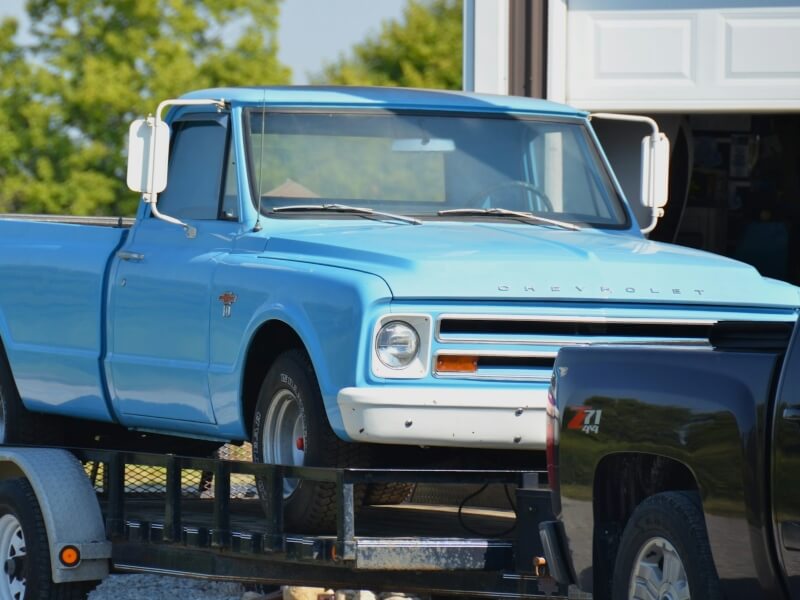
Hauling a project car sounds like a simple task. You get the car onto the trailer, strap it down and hit the road. Getting those steps right, though, can be tricky, since neglecting even a small detail can turn an easy trip to the garage into a roadside headache.
Here’s what people commonly get wrong when loading and towing a project car, so you don’t make the same costly mistakes.
1. Overlooking the Full Towing Weight
Before loading your car, take a moment to check what your truck can safely carry and tow. Look for the gross vehicle weight rating (GVWR), usually on the label inside the driver’s door. This sets the maximum weight of the truck itself, including passengers, fuel, cargo and the trailer’s tongue weight.
Once you confirm the GVWR, look at the payload limit to see how much weight you can add. You’ll then need to account for the trailer and project car by knowing your truck’s towing capacity and gross combined weight rating. Keep in mind that engine power, axle ratio, suspension and braking capacity affect how well your truck handles the load, so verify those ratings alongside the hitch and trailer’s weight limits before setting off.
2. Loading the Car in the Wrong Spot
Getting your car onto the trailer is one thing. Positioning it correctly is another. Too much weight at the rear can make the trailer sway, but too much at the front can overload your hitch and truck.
That’s why you should aim for a tongue weight of about 10% to 15% of the loaded trailer’s total weight, then ensure that your hitch can handle it. For instance, a trailer weighing 4,000 pounds when loaded should put roughly 400 to 600 pounds on the hitch. You can use a suitable scale to check the actual weight instead of relying on guesswork.
3. Loading Before Hitching
A trailer sitting on its own can move during loading, which is the last thing you want when you’re driving a project car up a set of ramps. Always hitch the trailer to your tow vehicle before loading, then make sure that the coupler is locked and the safety chains and electrical connections are secure. After you connect everything, make sure the trailer sits level or has a slight downward angle toward the tow vehicle.
If you’re loading a non-running vehicle, take extra care with the ramps and winch setup. Don’t forget to check that the ramps are rated for the vehicle’s weight and sit firmly in place.
4. Using the Wrong Tie-Downs
A few straps tossed over the tires won’t necessarily keep your vehicle secure, so choose properly rated tie-downs and attach them to suitable points on the car and trailer. If you want to protect freshly painted bodywork, wheel straps are perhaps the most suitable option. You also need to verify that every strap is tight and clear of sharp edges or moving parts.
Securing your load is important for both your car and the safety of others. The National Highway Traffic Safety Administration reports that unsecured objects on the road are involved in crashes that kill roughly 850 people and injure nearly 19,000 more each year. Since road movement can loosen tie-downs, make sure to inspect the straps during stops and adjust them as necessary.
5. Treating Trailer Tires Like Car Tires
Trailer tires have a different job from the tires on your tow vehicle. Also known as Special Tires, these are designed to support heavy loads and limit sidewall flex, which can help reduce trailer sway. That means you shouldn’t replace a damaged trailer tire with whichever passenger-car version happens to fit.
Before you set off, consider the tire’s pressure, load range, load index and speed rating. The load index tells you how much weight a tire can support. A tire with a load index of 60, for example, supports up to 551 pounds. Many Special Tires have a maximum speed rating of 65 mph, though some newer models are rated for higher speeds.
6. Underestimating Trailer Handling
Your truck will handle differently with a trailer, so practice in an open area before a long trip. Give yourself extra room for braking, take turns slowly and check your route for tight corners or steep hills.
Many people also fail to confirm licensing rules before they go. You may need a commercial driver’s license if the combination weighs 26,001 pounds or more.
Park It Like You Mean It
Your project car has probably survived years of questionable modifications, neglected maintenance and garage-floor repairs. The trailer ride should be the easy part. Therefore, match the trailer to your tow vehicle, place the car carefully, secure every load point and give the trailer a proper inspection before departure.