Following hot on the heels of the tremendous 50th anniversary celebrations of the launch of two significant cars into the UK car market – the Vauxhall Chevette and the Vauxhall Cavalier – in 2025, the Cavalier and Chevette Club are gearing up for another big year with the 45th anniversary celebrations of the launch of the highly successful Vauxhall Cavalier Mk II in August 1981.
Launched on 26 August 1981 as an all new, front wheel drive range of passenger cars.
Become Britain’s second-best selling car (behind the Ford Escort) in 1984 and 1985
Vauxhall sold 807,624 units of the Cavalier Mk II between 1981 and 1988.
Vauxhall decided in the early 1970’s to replace the Vauxhall Viva HC with an upmarket totally new bigger model which although more expensive, would be capable of challenging the Ford Cortina head on.
Vauxhall were keen to increase their share of the growing company car market and saw this new model as a prime contender to help it do so. The target launch date was set for the autumn of 1975 and a new name was planned – Cavalier. By replacing the Viva and increasing the size of the new mid-range car, Vauxhall would have the perfect complement for the new Chevette.
The Cavalier Mk 1 was formally launched at the London Motor Show ate Earls Court, in October 1975 where they were destined to make a dramatic and positive impact.
The initial UK model range was made up of a 1600L 2 & 4 door Saloon, a 1600GL 4 door Saloon and a GL 1900 2 door Coupe which featured a deep front spoiler. The 1900 engine was an option on the GL Saloon and not initially a model in its own right. Initial demand out-stripped supply very quickly and soon GM were having to look to increase production. All the new Cavaliers at this time were built in Belgium, at GM’s huge plant in Antwerp, however production of the Cavalier began at Luton with the first car coming off the line on 26 August 1977 driven by Eric Fountain Vauxhall’s Manufacturing Director.
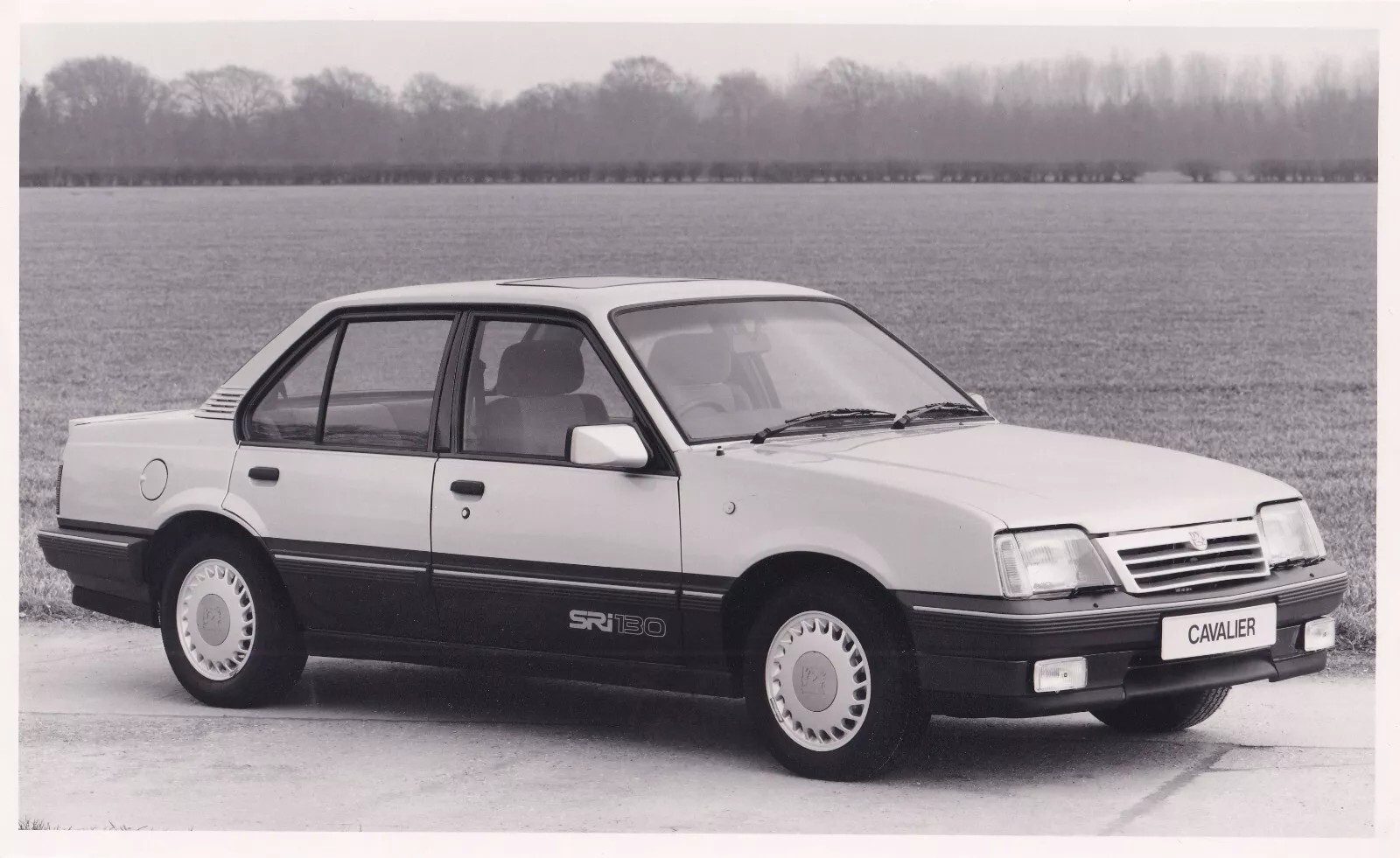
Following its launch in October 1975, the original Cavalier began to make an impact and gain ground in the British market, with 30,000 sales placing it as the 13th best-selling car for 1976. It climbed to eighth place the following year with more than 41,000 sales, peaking at seventh place in 1978 with over 55,000 sales. It was still the seventh best seller in 1980, though sales for that year had dipped back to just over 41,000 as the economy entered recession. Over 248,000 were sold in total over a six-year production run.
Vauxhall Cavalier Mk II
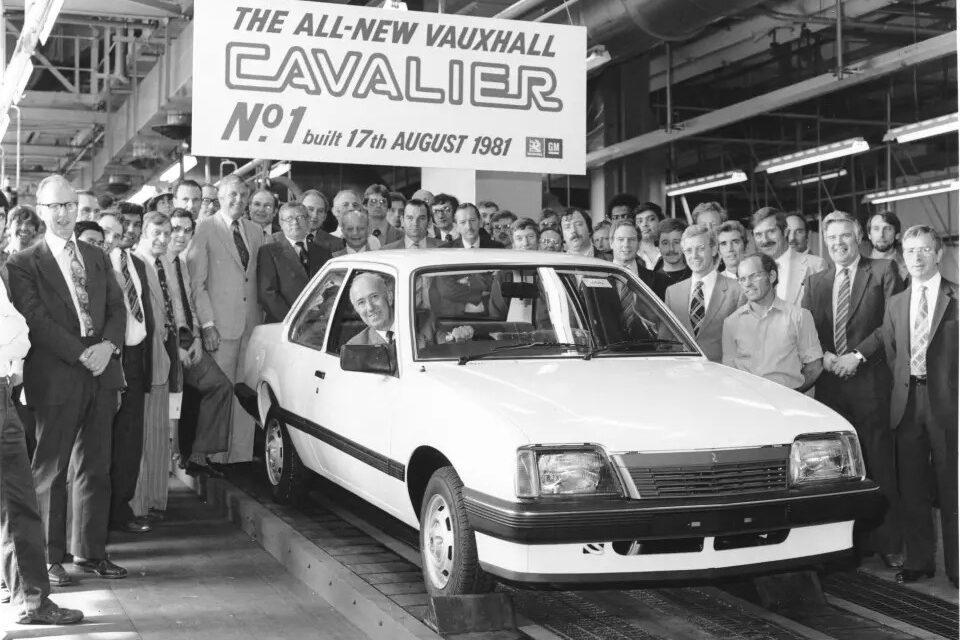
After a four-year development program, the first of the new front-wheel drive Cavalier Mk II’s rolled off the production line at Luton on the 17th August 1981 ready for its launch nine days later on 26th August. Unlike the previous model, the Cavalier Mk II had no styling or engineering difference from its Opel sister the Ascona C, differing only in badging and trim. When launched, it offered class-leading levels of performance and fuel economy.
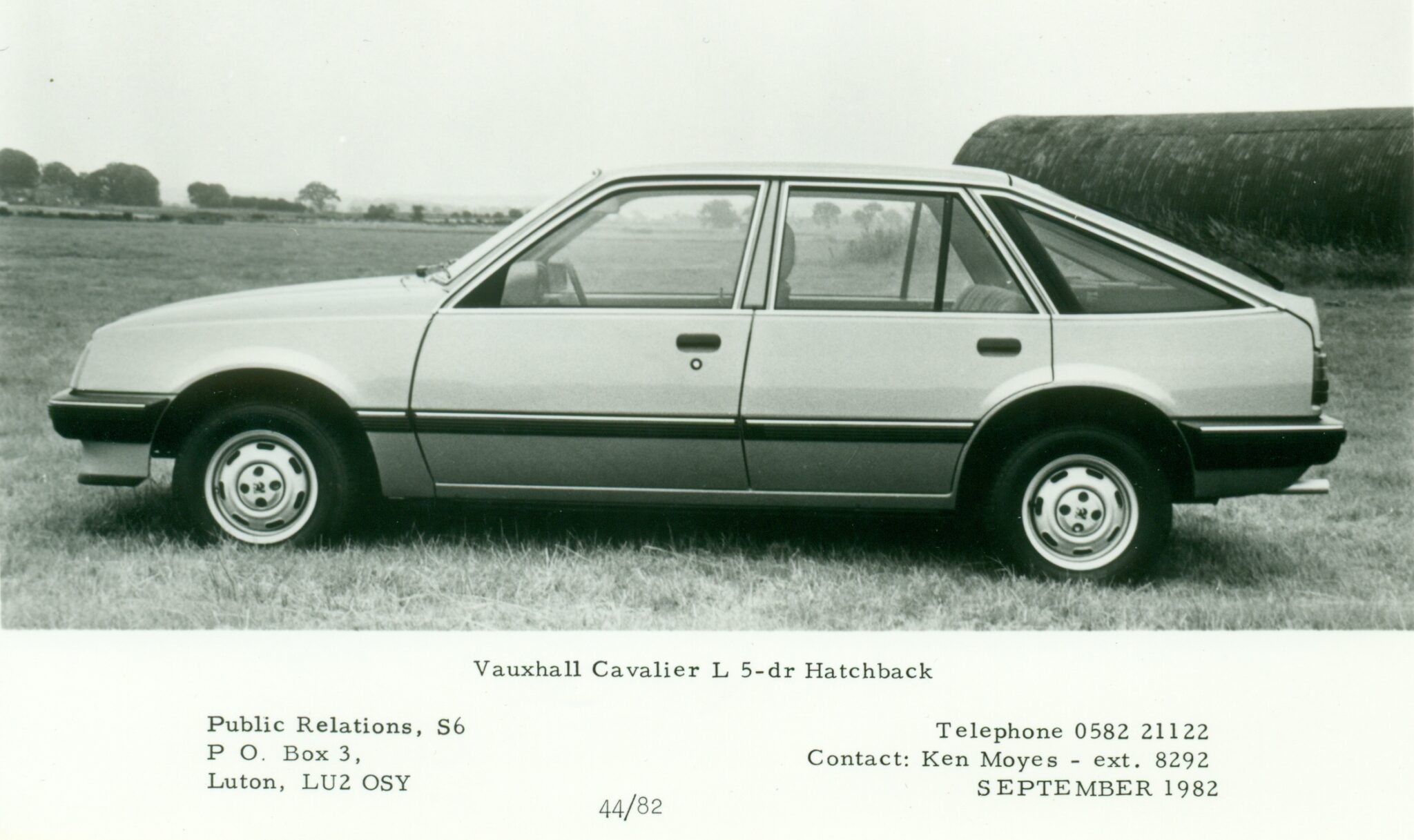
The new Cavalier could not have arrived at a more opportune time, as the new Ford Sierra’s radical styling was not currying favour with the British public, and the Cavalier soon overtook the Sierra in sales, outselling the Sierra in 1984 and 1985.
The Cavalier Mk II was Britain’s second-best selling car in 1984 and 1985, only beaten by the Ford Escort. The model range offered a choice of 1.3 or 1.6 litre engines derived from the smaller Vauxhall Astra, and in 1983 a 1.8 litre engine was launched, which had electronic fuel injection. A 1.6 diesel also appeared and the 1.8 was supplemented by a 2.0 in the 1987 model year.
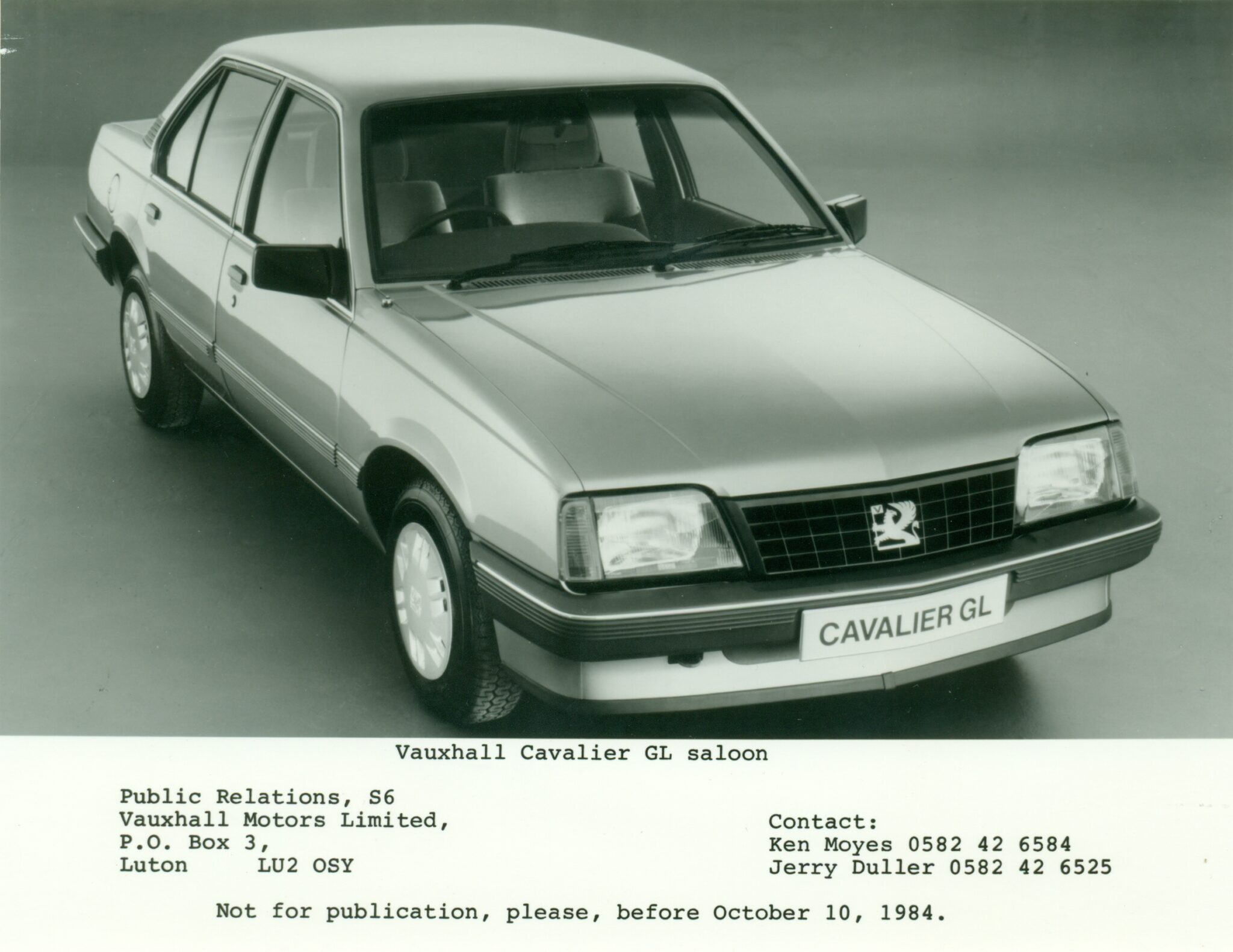
At its launch, the MK II Cavalier was widely praised by the motoring press, and like its predecessor became the catalyst for a big increase in the Vauxhall market share. To give some indication as to its success, in 1981, 33,400 MK1 and MK2 Cavaliers had been sold in the UK, a year later, sales had increased to over 100,000 cars. By 1983, it sold over 127,000 units which was then 7% of the new car market, but by 1984 and 1985, it became Britain’s second best-selling car, with more than 130,000 sales annually.
Vauxhall sold 807,624 Cavalier Mk II’s between 1981 and 1988.
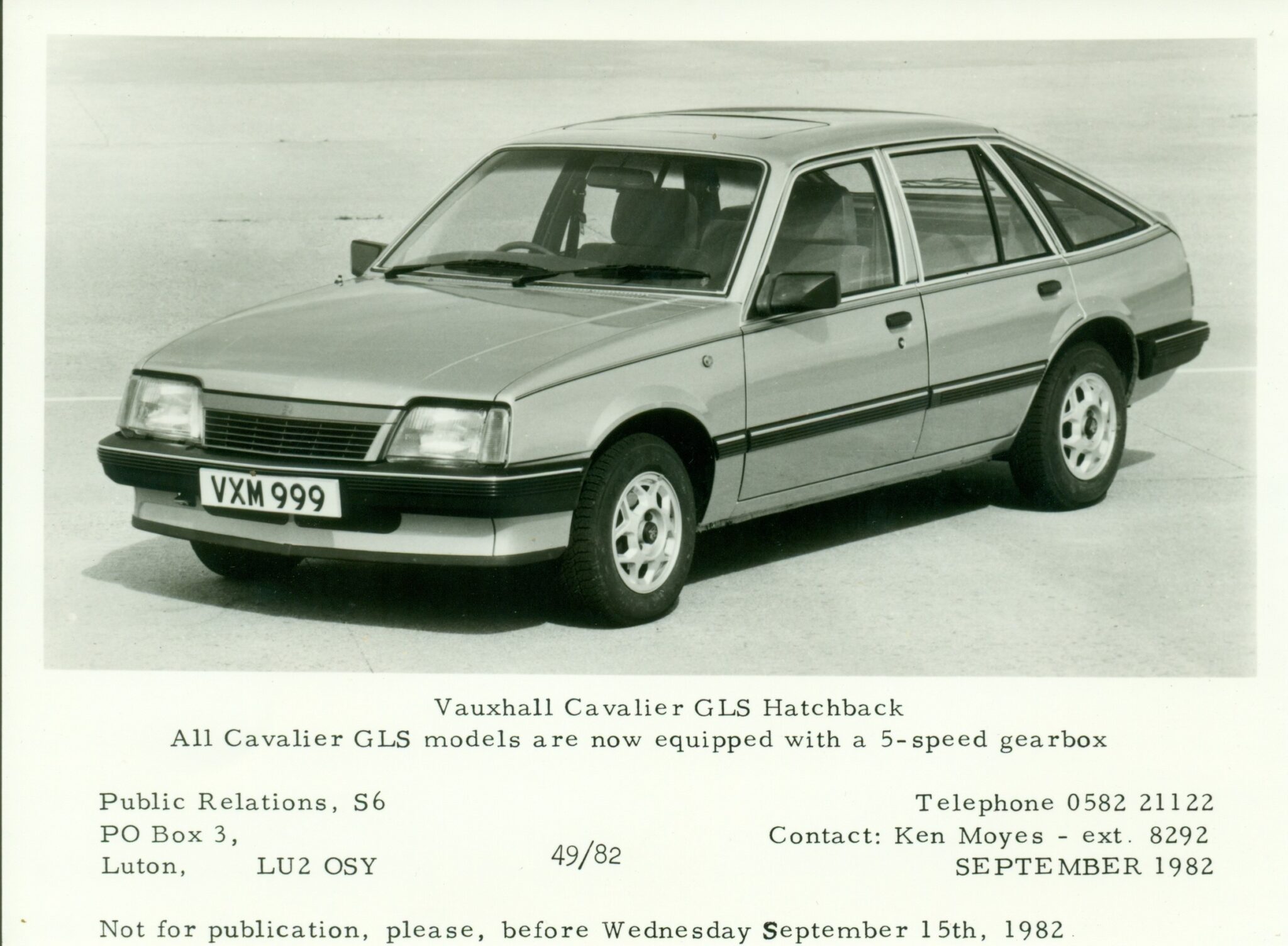
The final generation of Cavaliers, the Mk III, went on sale on 14 October 1988 – by then the model was a firm favourite with the motoring public but perhaps more importantly also the huge fleet sector, where it dominated the company car parks of virtually every UK business.
After twenty years and three generations, the Vauxhall Cavalier name came to an end in October 1995 when it was replaced by the new Vectra.
On 27th September, the Cavalier and Chevette Club will be holding their 2026 National Day, with members driving from all over the UK to join other enthusiasts at the Great British Car Journey, Derwent Works, Ambergate Derbyshire DE56 2HE, to take part in the Museums popular Vauxhall Day, between 10.00am and 4.00pm.
For further information please contact the Vauxhall Cavalier and Chevette Clubs PR Officer
Nigel Hughes – email [email protected] or phone 07598 076197
Great British Car Journey – https://greatbritishcarjourney.com
The Cavalier and Chevette Club – https://cavalierandchevetteclub.com