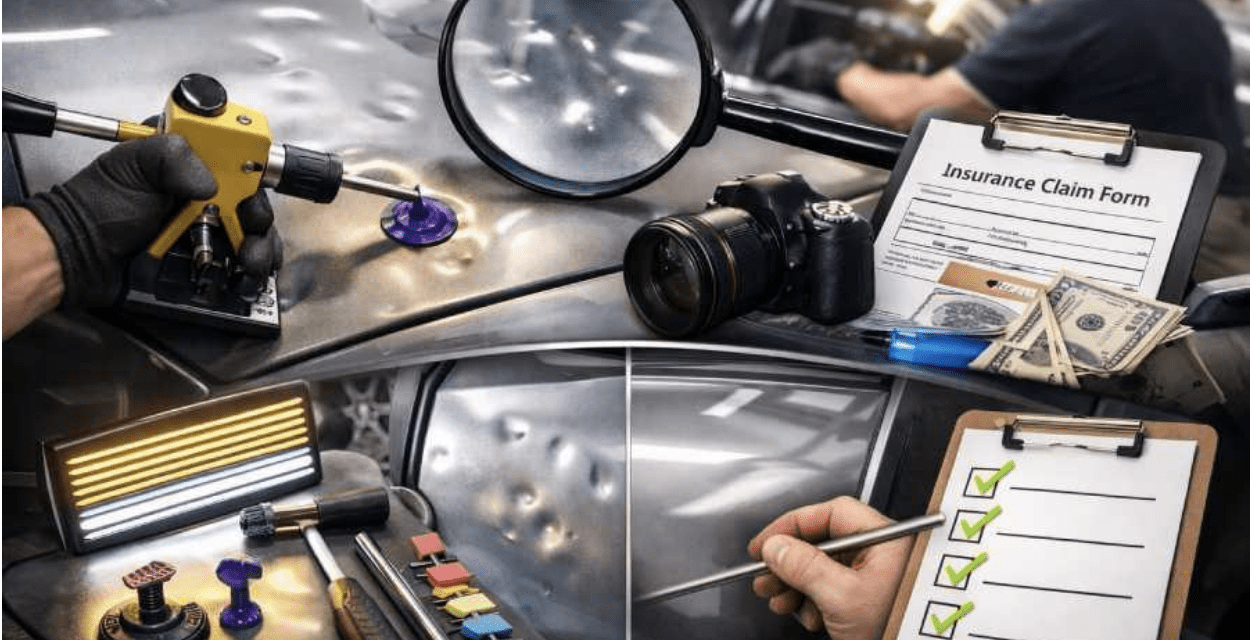
Hailstorms can leave vehicles covered in dents, but repairing that damage doesn’t have to mean costly repainting or lengthy body shop visits. This ultimate guide to hail dent repair walks you through how to remove dents safely while protecting your car’s original paint using modern paintless dent repair techniques. From evaluating damage and choosing the right tools to mastering paint-safe repair methods, the article provides a clear, practical roadmap for both DIY enthusiasts and those considering professional services. Whether you’re dealing with minor dings or widespread hail damage, understanding the right approach can help you restore your vehicle efficiently without compromising its appearance or value.
Assessing hail damage, paint integrity, and PDR suitability (plus documentation)
Start every hail dent repair with a careful evaluation. The goal is to restore panels while preserving the original color and gloss, using paintless dent repair (PDR) wherever possible. This assessment determines whether a panel can be corrected without repainting and helps you document hail damage for insurers.
Identify dent types and locations:
- Soft, shallow hail impressions are ideal for PDR and common on hoods, roofs, and trunk lids.
- Sharp or creased dents near body lines, panel edges, or beneath bracing are more challenging and may require advanced PDR techniques by trained technicians.
- Crowns (raised metal surrounding a low) signal displaced metal that must be relieved during dent repair for a high degree of perfection.
- Evaluate door dings and a door dent from everyday parking incidents while you’re at it—combining dents and dings into one visit is often cost efficient and time-saving.
Check paint and clear coat health:
- Inspect under raking light for micro-cracks, chips, or prior repairs. If the clear coat is broken or the paint has lifted, paintless dent repair is not advisable on that spot.
- Look for signs of prior repainting (texture mismatch, thick edges around trim). Refinished panels can be more brittle; temperature control will be critical.
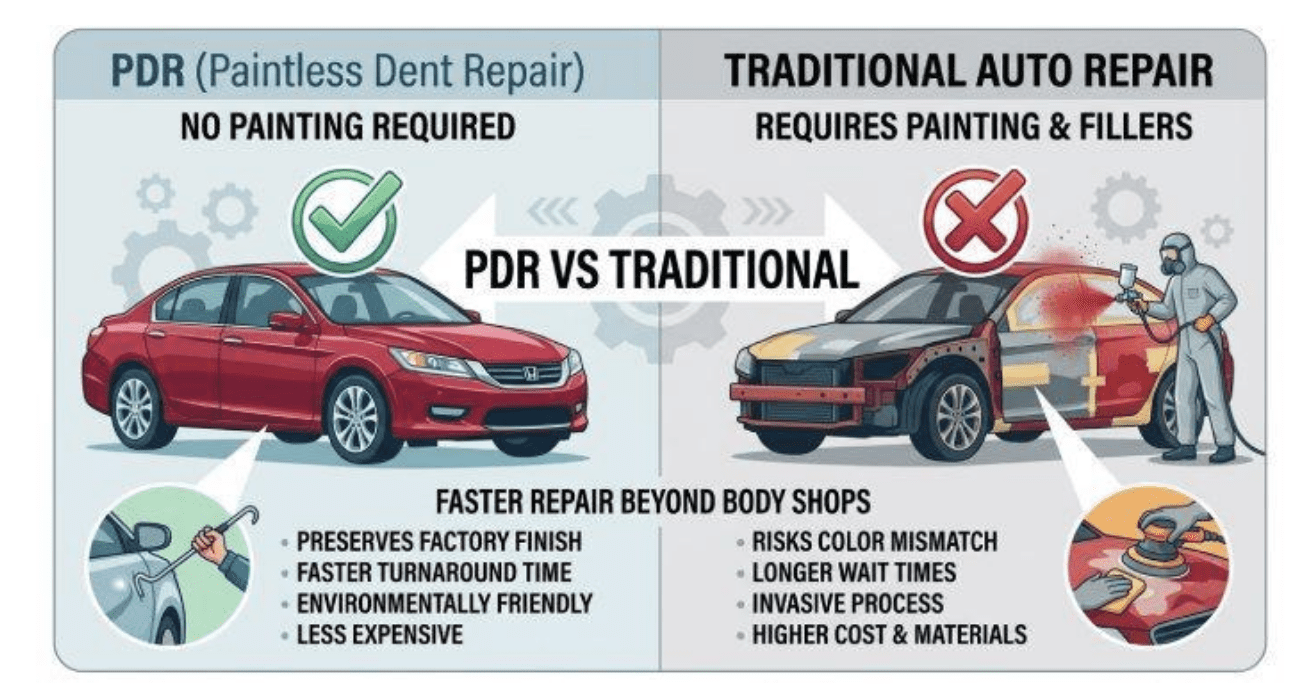
- When paint is intact, PDR offers no painting and preserves the original color, which is both cost efficient and a quick repair compared to body shop repairs.
Confirm panel material and access:
- Steel panels typically move predictably; aluminum can require more precise heat management and may spring back differently.
- Double-skin areas and roof bracing complicate car roof dents; expect more glue-pulling and finesse.
- Map access points for PDR rods; avoid any repair method that involves drilling access holes—this risks corrosion and voids many automotive manufacturer warranties.
Determine PDR suitability and plan:
- If the paint is sound, dents are not too deep or creased, and access is available, paintless dent repair is the preferred repair method to remove dents without repainting.
- Prioritize panels with the highest density of minor dents for efficient sequencing.
Document for insurance:
- Capture high-resolution photos and short videos showing reflections from a line board or LED strip to highlight hail damage and door dings.
- Include panel-wide images and close-ups with a ruler or coin for scale, plus date/time and location.
- Keep an organized estimate noting dent counts per panel; insurers appreciate clear before and after dent repairs images.
- In regions like Houston (West University) or Puchong Selangor (near Tesco), insurers may be familiar with reputable PDR shops; noting a shop preference can streamline approvals.
Tools, materials, and setup: what you need for safe, precise PDR
Assemble specialized tools and create a controlled workspace before starting the dent removal process. Proper tool kits are both time-saving and cost efficient over multiple repairs.
Core PDR tools and materials:
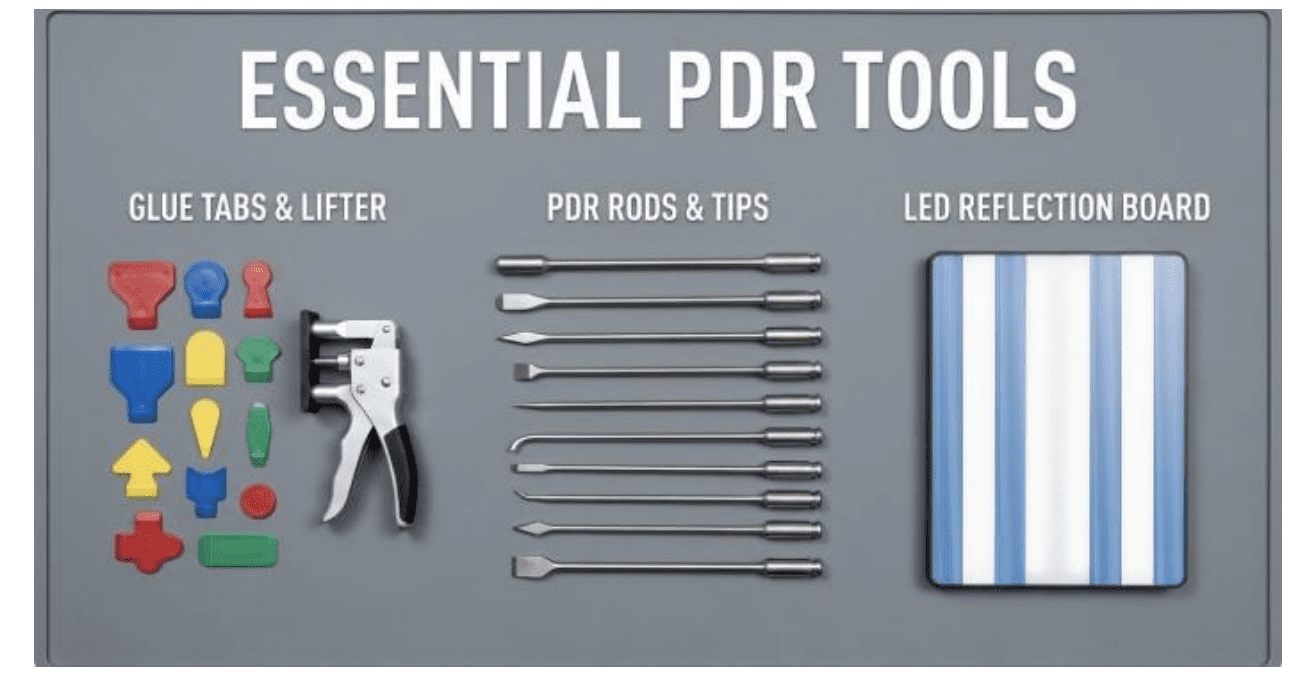
- PDR rods and tips: A range of lengths, bends, and interchangeable tips (rubber, plastic, polished metal) for pushing from behind with precision.
- Glue-pulling kits and tabs: Variety of tab sizes/shapes, PDR glue, lifter or slide hammer for exterior pulling where access is limited.
- Knockdowns and hammers: Plastic or polished knockdowns with light tapping hammers to relieve crowns and refine high spots.
- Blending hammers: For soft, wide-area crown control and ding removal blending near edges and body lines.
- Lighting: LED line boards or fog boards to read panel reflection and match orange peel texture as you progress.
- Heat management: Heat gun or IR lamp to gently warm panels (especially on aluminum or repainted surfaces) and protect the original color.
- Release agents and cleaners: Isopropyl alcohol for glue release; panel-safe degreasers to prep surfaces.
- Safety gear: Nitrile gloves, safety glasses, and fender covers for responsible car care and clean automotive repair practices.
Ideal workspace conditions:
- Temperature stability: 70–85°F (21–29°C) is optimal. Avoid cold, which embrittles clear coat, and excessive heat, which can soften paint.
- Controlled lighting: Shade or indoor bay to clearly read reflections. Avoid direct sun flares.
- Solid footing and panel protection: Non-slip mats, panel stands for hoods/doors, and trim tools for safe access.
Notable places to locate professional repair help and supplies:
- In Houston’s West University area, Erics Car Care offers collision repair and PDR—use Waze for navigation and check their Facebook or Google Business Page for testimonials and customer satisfaction cues.
- In Malaysia, Dent Repairs Malaysia in Puchong Selangor (near Tesco) is known for paintless repair and door ding service; browse their Google Business Page for service info.
- When contacting shops, ask for a PDR (Paintless Dent Repair) specialist or a point person (e.g., Mr. Jerry) and confirm they use specialized tools and avoid drilling.
Paint-safe repair techniques, quality checks, pitfalls, pro help, and prevention
Follow a systematic sequence to remove dents while safeguarding paint. These steps apply to hail dent repair, door dings, and minor damage on most vehicle panels.
Step-by-step paint-safe techniques:
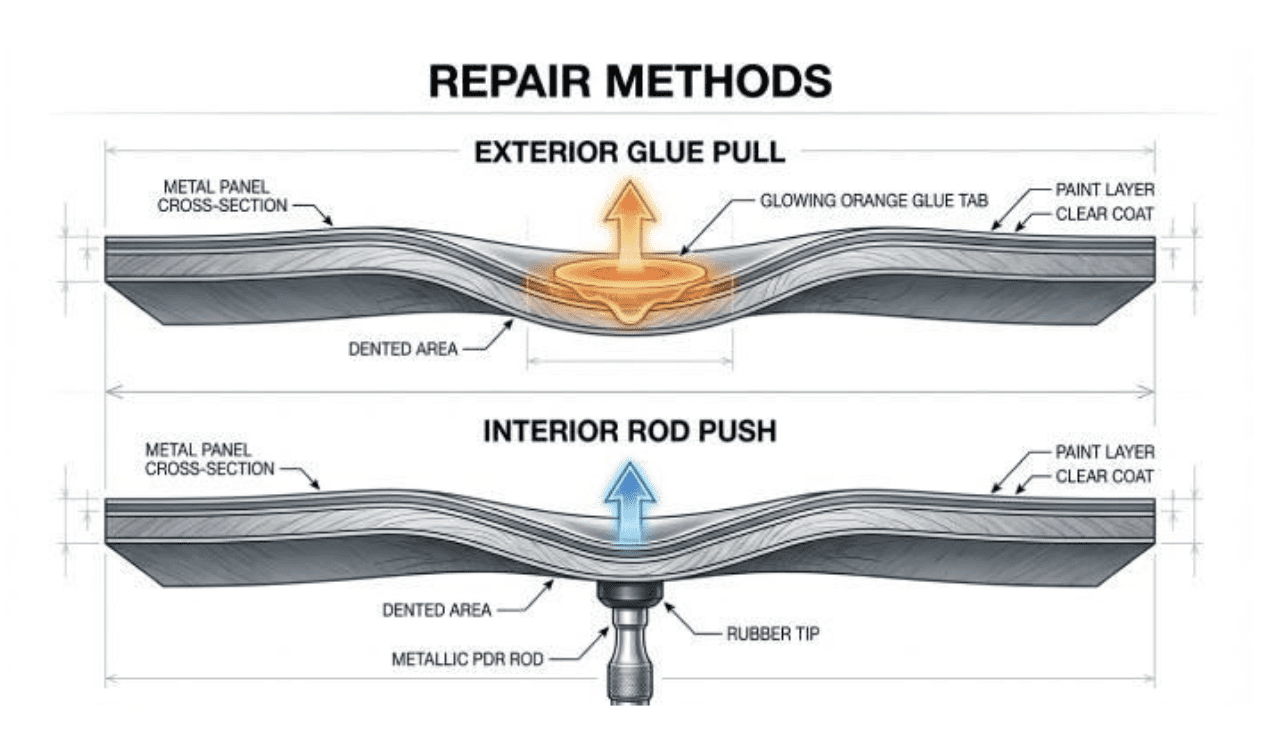
- Exterior glue pulling
- Clean the dent area with alcohol. Select a tab slightly smaller than the dent to minimize overpulling.
- Warm the panel moderately, especially on aluminum or suspected repainting.
- Apply PDR glue, place the tab, let it set, then lift using a mini-lifter for controlled pulls; a slide hammer can be used for tighter, deeper lows.
- After each pull, knock down any highs around the periphery. Repeat with progressively smaller tabs until the low is reduced.
- Pushing from behind
- Use appropriately curved PDR rods and tips to access the dent’s backside. Leverage off body structure using protective caps to avoid marring.
- Make micro-controlled pushes at the dent’s deepest point, working a tight spiral outward. Frequently check reflections to maintain the panel’s original color texture look with no repainting required.
- Switch tips as you refine: softer tips for initial movement, harder polished tips for final precision.
- Working crowns and high spots
- Lightly tap down crowns with a knockdown, keeping the hammer mass low. The goal is to relax tension so the low can rise without overstretching.
- Blend edges using a blending hammer to reintroduce natural panel flow and orange peel consistency.
- Sequencing many dents
- For hail damage or car roof dents, grid the panel and address larger lows first, then medium, then minor dents. This time-saving order prevents rework as crowns relax.
- Work from panel edges inward, staging glue pulls before interior pushes when access is limited.
- Temperature control to protect paint
- Maintain gentle warmth; avoid hotspotting with a heat gun. On prior repainting, keep temperatures lower and extend working time.
- Do not attempt dry ice or boiling water; both can shock paint and clear coat, risking cracks and mismatched texture.
Quality checks and finishing:
- Reflection and orange peel: Match line board reflections and surface texture to adjacent panels. True PDR returns the panel’s optics and original color depth without repainting.
- Micro-finishing: If needed, perform light polish only (finishing polish on a soft pad) to remove glue residue or faint rub marks—no sanding on OEM paint.
- Panel review: Inspect under various lights and angles; compare to neighboring panels for a high degree of perfection and consistent ding removal.
Common pitfalls and myths to avoid:
- Dry ice, boiling water, and suction cups rarely produce professional repair results and can distort metal or mar clear coat.
- Drilling access holes invites corrosion and undermines automotive manufacturer standards and resale value.
- Overpulling and aggressive pushing stretch metal, making dents harder to finish and possibly requiring repainting.
When to call a pro:
- Deep creases, edge dents, aluminum with sharp impacts, double-skin areas with limited access, or any cracked paint should be handled by trained technicians.
- If you lack visibility tools, or your DIY dent repair results plateau with visible highs/lows, seek professional repair for best customer satisfaction.
Choosing a qualified PDR tech and understanding costs:
- Look for shops specializing in paintless dent repair and paintless repair, not just general body shop offerings. Ask about their dent removal process, tool kits, and whether they avoid drilling.
- Request a reasonable price estimate per panel and ask how they’ll protect the original color. PDR is generally a cost efficient and affordable alternative to full body shop repairs, with quicker cycle times.
- Validate experience and service quality by reviewing before and after dent repairs photos and authentic testimonials on a shop’s Facebook or Google Business Page. Names you may see in local communities—such as James Tan, Nurul Izzati Wahidudin, or Wong Yook-Loon—often discuss service experiences; use such feedback as one data point among many.
- Regional examples include Erics Car Care (Houston, West University) and Dent Repairs Malaysia (Puchong Selangor, near Tesco). Navigate with Waze, confirm availability, and ask if they’ve worked on your model (e.g., an HRV).
Insurance and claims:
- Comprehensive coverage typically handles hail damage. Provide clear photos, dent counts, and shop estimates. Many insurers recognize PDR (Paintless Dent Repair) as a preferred, time-saving solution that preserves original color and avoids repainting.
- If a panel requires repainting, a hybrid approach (PDR to minimize filler, then refinish) may still reduce costs and preserve more original equipment manufacturer (OEM) integrity.
Practical hail-prevention strategies:
- Whenever possible, park under covered structures or temporary carports during hail alerts; foldable covers can mitigate minor dents from small hail.
- Use weather apps and municipal alerts to move your vehicle pre-storm. For commuters, check mall or supermarket garages (e.g., near Tesco) during severe weather.
- Maintain a premium on routine car care—clean, waxed surfaces show reflections better, aiding both DIY and professional evaluations.