Visual Branding in Motorsport Events: A Technical Guide
Posted by James Ruppert | Nov 12, 2026 | Motorsport, Racing Cars, Brands, Advertising
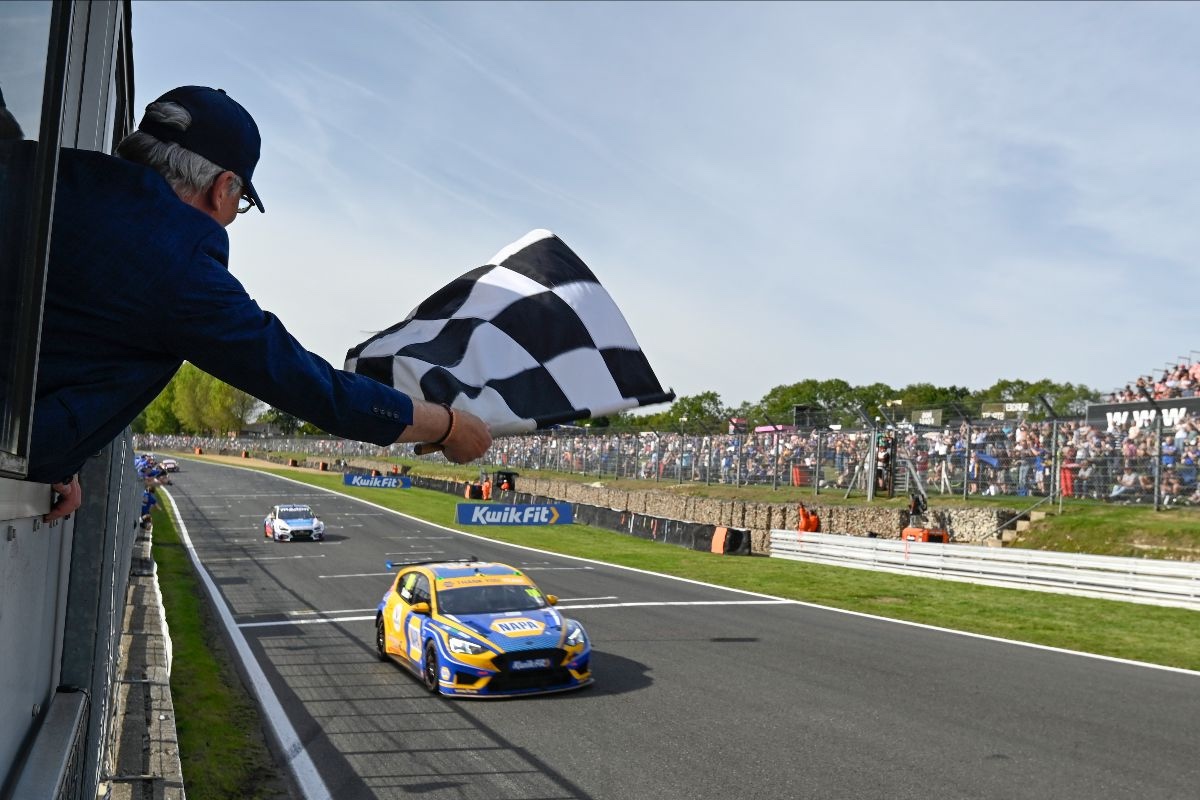
A race car crosses the frame in under a second. Viewers read color first, then shape, then logos. Visual branding in motorsport is built around that sequence. Every surface has to communicate fast, from a nose cone to a grandstand banner.
From National Colors to Sponsor Colors
Before 1968, color signaled nationality. Italian cars ran red. French cars ran blue. British cars ran green. That year, the FIA allowed unrestricted sponsorship after several major sponsors withdrew.
Team Gunston ran the first sponsor livery at the South African Grand Prix. Lotus followed in Spain with Gold Leaf colors. Livery shifted from national identity to commercial identity. The car became a moving ad surface, and every design choice gained a price tag.
Branding Beyond the Car
The car is one layer. Event branding covers the whole venue. Fans meet pit lane signage, paddock fencing, gantries, and entry gates long before they see a car. Flags fill the gaps that fixed signage cannot.
Event crews use custom teardrop flags along access roads, fan zones, and sponsor villages. The shape keeps the graphic open in light wind. A curved edge rides on a flexible pole, so the print stays readable from several angles. Most units use dye-sublimation on knit polyester. Bases vary by surface: ground spikes for grass, cross bases for hard standing, and water or sand weights for temporary pads.
Match colors before printing. Request a physical proof and check it against the brand’s Pantone references. Screens lie about saturation. Fabric does not.
Designing for the Camera
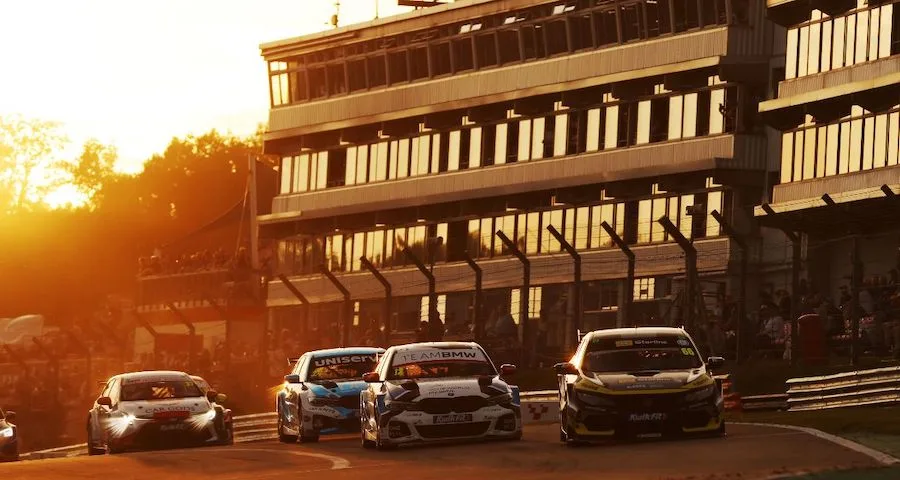
Livery design follows broadcast physics. Video compression crushes fine detail at speed. Designers respond with bold choices:
-
High-contrast color blocks that survive compression.
-
Large wordmarks on the sidepods, engine cover, and rear wing.
-
Few gradients, since they band on low-bitrate streams.
-
Clear space around race numbers and driver names.
Rules add limits. Sporting regulations require both cars entered by a competitor to run substantially the same livery at each event. Series and governing body logos also take fixed positions. Designers work around them.
Vinyl wraps allow quick livery changes between events. Paint suits long programs. Either way, a matte or satin finish cuts glare under floodlights and strong sun.
Sightlines and Placement
Placement beats volume. Map the camera positions first. Turn exits, start straights, and podium backdrops get the most airtime. Put large graphics there.
Then map foot traffic. Gates, ticket scanners, and merchandise queues slow people down, so fans actually read what is in front of them. Avoid clutter. Two clear messages outperform six crowded ones.
When Regulation Forces a Redesign
Rules have always shaped branding. British American Racing wanted separate 555 and Lucky Strike cars in 1999. The identical livery rule blocked that plan. The team painted one car with a split design instead. Later tobacco bans pushed teams toward barcodes and alternate slogans.
Governing bodies also control brand space. The 2026 Formula One rules put the FIA logo on each car’s nose, so designers now plan around it. McLaren needed FIA dispensation for its 2021 Monaco livery, and teams have run more one-off designs since. This documented history of Formula One sponsorship liveries shows the pattern clearly. Each rule change produces a new design workaround.
Measuring Brand Return
Visibility is not value. Brands need numbers. Track these:
-
Broadcast exposure: seconds of logo time on screen per session.
-
Social reach tied to branded content and hashtags.
-
On-site engagement: QR scans, sampling counts, and queue dwell time.
-
Lead capture from hospitality and paddock activations.
Set baselines before the season. Compare each event against them. Cut placements that fail to move the numbers.
Production Materials and Durability
Motorsport branding must withstand more than visual scrutiny. Outdoor assets face wind, rain, dust, UV exposure, and repeated handling during transport. Choose weather-resistant inks, reinforced stitching, and suitable mounting hardware for temporary installations. Vinyl graphics need clean application surfaces to prevent peeling at high speeds or under changing temperatures.
For trackside displays, check fabric tension and anchor stability before gates open. Establish a replacement schedule for damaged banners and faded prints. Consistent maintenance protects brand presentation throughout the season and reduces last-minute production costs. A durable visual system keeps sponsor messaging clear from practice sessions through race day.
Practical Takeaways
Keep the system simple. Use one palette across car, flags, and signage. Test every design at phone size. Check each asset against series rules before printing. Brief print partners early, since production and shipping set the real deadline.