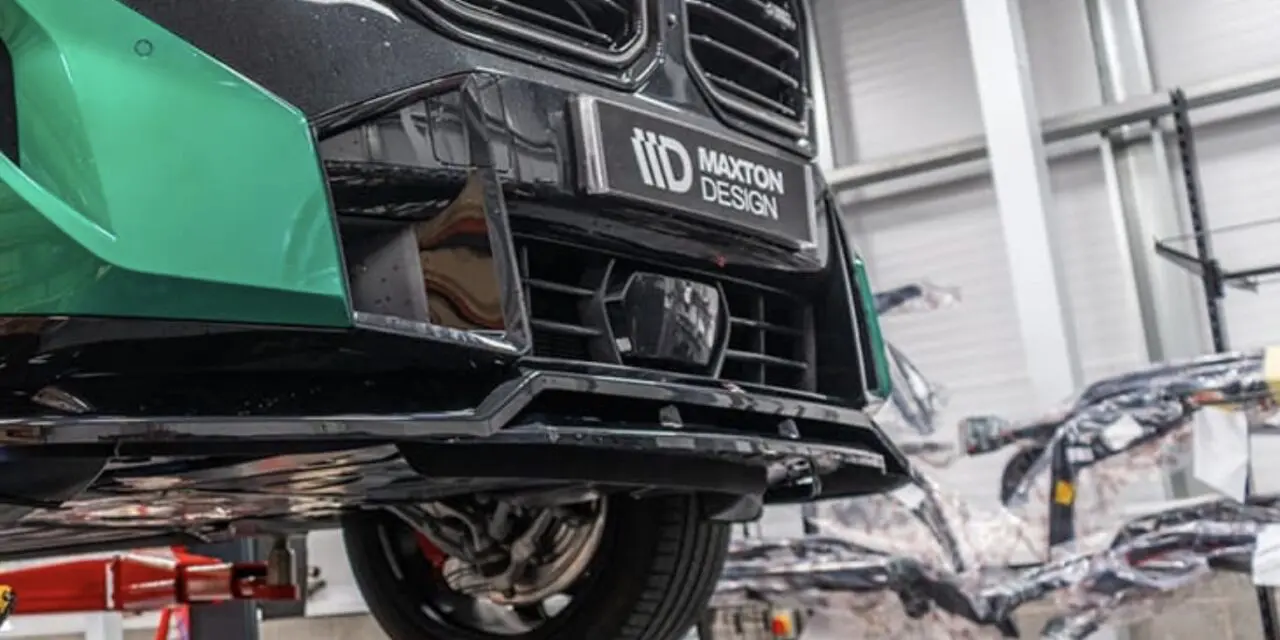
There is a version of car modification that ends with a bloke in a unit in Dewsbury cutting your front bumper in half, and there is a version that ends with four boxes in the loft and a car that goes back to standard in an afternoon. Both are legitimate. Only one of them is sensible if the car is on finance, on a shared policy, or destined for the classifieds inside three years.
Most of what people now buy falls into the second category. Front lips, side skirt extensions, spoiler caps, rear valances: parts that sit on top of the factory bumper rather than replacing it. They are the reason the styling market has moved from the fringes of car culture into the mainstream of ordinary ownership. But mainstream does not mean consequence free, and the consequences are boring administrative ones rather than dramatic ones.
Reversible is the whole point
The single most useful question before buying anything is how it attaches. Parts that bolt to existing points, clip into factory apertures or bond with automotive tape come off again. Parts that require you to drill into a painted panel do not, or at least not without filler and a respray. Plenty of good products fall into the second group, and there is nothing wrong with them, but the listing should tell you which you are looking at before the card comes out. If it does not say, ask before ordering rather than after.
The other half of reversibility is storage. The standard parts you take off are worth keeping, wrapped, labelled and out of the damp. People throw away original spoiler caps and grilles constantly, then spend more replacing them at the point of sale than the styling cost in the first place.
Tell your insurer, in writing
Cosmetic modifications are a material fact. Whether a splitter changes the risk profile of a Golf is a question for actuaries, but it is not a question you get to answer on their behalf. Declare it, get the confirmation in writing or in the policy schedule, and keep it. The realistic downside of not declaring is not a higher premium, it is a claim conversation at the worst possible moment, and the difference in premium is usually smaller than people assume.
The same logic applies to leased and financed cars, where the agreement rather than the insurer sets the rules. Reversible parts are generally the answer there too, for the obvious reason that the car has to go back looking like the one that was handed over.
What the MOT actually looks at
There is a persistent belief that any visible modification is an MOT problem. It is not. The test is concerned with safety, and section 6 of the inspection manual deals with body, structure and attachments. What matters there is whether the vehicle has dangerous sharp edges or projections likely to injure other road users, and whether panels and attachments are secure. Bumpers, spoilers and side skirts fall inside that scope.
In practice that gives you two things to check. Nothing should be loose, flapping or hanging off, which is a fitting and adhesive question rather than a product question. And nothing should present an edge that would cut a pedestrian or a cyclist brushing past the car. A properly fitted lip that follows the line of the bumper does neither. A half detached one that has been dragged along a speed bump for six months might do both.
Fitment is where the money actually goes wrong
The expensive mistake is almost never the part. It is buying the right part for the wrong car. Manufacturers now ship the same model with several different bumpers depending on trim, then facelift the range halfway through and change the front again. A part cut for one of those will not sit flush against another, and no amount of goodwill from the seller changes the shape of the moulding.
That is why the catalogues worth using are structured by generation and trim rather than by model name, and why the good ones publish an explicit fits only statement on each product. Maxton Design UK, the British dealer for the Polish styling brand, splits its listings that way, and the fits only line is the part to read before anything else. If your car is not named on it, the part is not for your car, regardless of how close the description sounds.
Four details settle most of it: the exact generation, the trim line, whether the car is pre or post facelift, and whether anything is already fitted at the back that a rear valance has to work around, a tow bar being the usual culprit. Ten minutes with the V5C and a torch under the rear bumper is cheaper than return postage.
Material: less exciting than it sounds
Most of the market runs on ABS, which is the same family of plastic used for factory bumpers. It is impact resistant, it flexes rather than shattering when it meets a kerb, and it takes paint in body colour so the part disappears into the car if that is the look you want. Carbon fibre sits above it as a different proposition, lighter and deliberately visible, at a price that reflects the process. Neither is the correct answer in general. They answer different questions, and for a car that gets parked on a street every night the plastic one is the answer more often than enthusiast forums admit.
The resale arithmetic
Modified cars sell to a narrower audience than standard ones. That is not a moral judgement, it is just a smaller pool of buyers, and a smaller pool means longer on the market or less money. The way round it is to have the option of putting the car back. Reversible parts, standard components retained, no drilled panels, and a declared and documented insurance history. Do that and the modifications are a feature for the buyers who want them and a non-issue for the ones who do not.
If you are at the stage of working out what actually exists for your car rather than what looks good on somebody else, it is worth starting from the fitment tree and working down: pick the make, the model and the generation, and see what is genuinely made for it. You can browse body kits by make and model and get to a real answer faster than by searching part names and hoping.
None of this is an argument against modifying a used car. It is an argument for doing it in a way that leaves you with options, which is the same argument that applies to almost everything else in ownership.