Proper wheel alignment is an important aspect of vehicle care that is sometimes overlooked. Misalignment impacts not only how your car feels on the road, but can also affect safety, running costs, and the lifespan of your tyres.
Many drivers only think about wheel alignment when a problem is noticeable, yet regular checks can play a key role in safe and comfortable driving. Alignment refers to the precise adjustment of your car’s suspension angles so that your tyres contact the road as intended. This matters for anyone who values consistent handling, predictable performance, and cost-effective motoring. For example, tyre fitting st helens services may become necessary if misalignment causes uneven tyre wear, making preventative attention worthwhile.
Key features of wheel alignment explained clearly
Wheel alignment involves adjusting the angles at which tyres meet the ground, ensuring all wheels are set precisely according to manufacturers’ specifications. These angles are mostly defined as camber, caster, and toe. Camber is the inward or outward tilt of the tyre when viewed from the front, while caster describes the angle of the steering pivot as seen from the side. Toe refers to whether tyres point in or out when viewed from above.
This process is sometimes confused with wheel balancing, though they serve different purposes. Balancing addresses how weight is distributed around the wheel to help prevent vibrations. Alignment, on the other hand, ensures tyres all travel in the correct direction, promoting stable, predictable movement. If left unchecked, misalignment can affect the benefits of a recent wheel balance, which may lead to increased tyre wear or handling issues.
How to recognise when alignment is off
There are several signs that may suggest your vehicle’s alignment is not correct. The most noticeable is when your car pulls to one side even though you are steering straight. This might cause frequent small corrections with the steering wheel to keep the car from drifting.
Other symptoms include uneven or rapid tyre wear, and the steering wheel sometimes failing to return to a level position after turning. You may also experience vibration in the steering wheel or reduced stability at higher speeds, particularly during cornering or wet conditions. This can include inconsistent handling or braking, which can make it worthwhile to have your alignment checked to help maintain safety and vehicle responsiveness.
Importance for safety and predictable handling
Wheel alignment influences your vehicle’s ability to travel in a straight line and to respond reliably during sudden manoeuvres. When all four wheels are set correctly, steering feels more accurate and consistent. Misalignment can make the vehicle harder to control, especially during emergency stops or sudden direction changes.
Safety may be further affected in wet conditions, as incorrect alignment can reduce tyre contact with the road and potentially increase the risk of sliding or aquaplaning. Proper alignment helps maintain stability while braking or cornering, supporting anti-lock brakes and traction control systems in operating as intended. This overall helps maintain safety for both drivers and passengers.
Tyre wear, maintenance costs, and efficiency impacts
Poor alignment can lead to premature tyre wear, causing tread to erode faster on one side or develop irregular patterns. This shortens the lifespan of your tyres, meaning you may need replacements sooner than expected. Persistent misalignment can also raise running costs, as frequent tyre replacement becomes necessary.
Fuel efficiency and ride comfort may also be influenced by alignment. Misaligned wheels can increase rolling resistance, which may require your engine to use more fuel for the same journey. Over time, this affects your expenses and provides another reason to include wheel alignment checks in regular vehicle maintenance.
Understanding causes and alignment service processes
Everyday events such as hitting potholes, striking kerbs, or carrying heavy loads can alter wheel alignment. Suspension repairs, fitting new tyres, or worn suspension components can also cause alignment to shift away from manufacturer settings. If you notice any of the warning signs or have experienced such incidents, having your alignment checked is recommended.
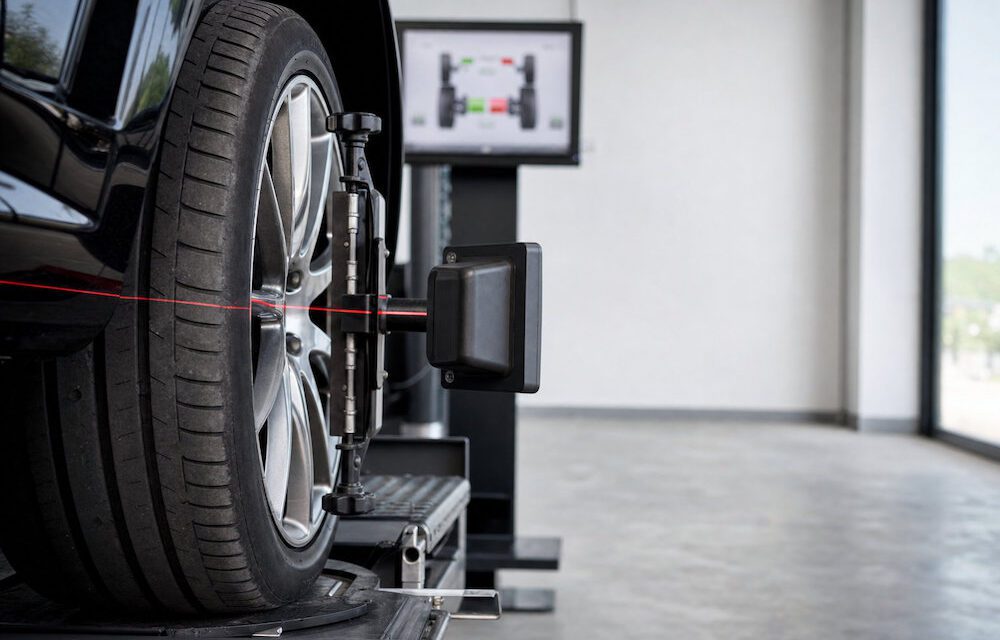
A professional alignment service checks the suspension and steering components while measuring each wheel’s alignment against factory recommendations. Specialists use dedicated equipment for precise adjustments and may identify other related issues. Making alignment part of routine maintenance can help retain both safety and handling performance.
Understanding the role of wheel alignment enables drivers to maintain their vehicles more proactively. Regular checks support safe handling and prolong tyre life, helping to provide reliable performance every time you drive.