Valvetronic founder Austin Huffman on the business of success
Posted by James Ruppert | Aug 27, 2026 | Articles, Car Culture, Car Manufacturers, Car Parts, Car Products
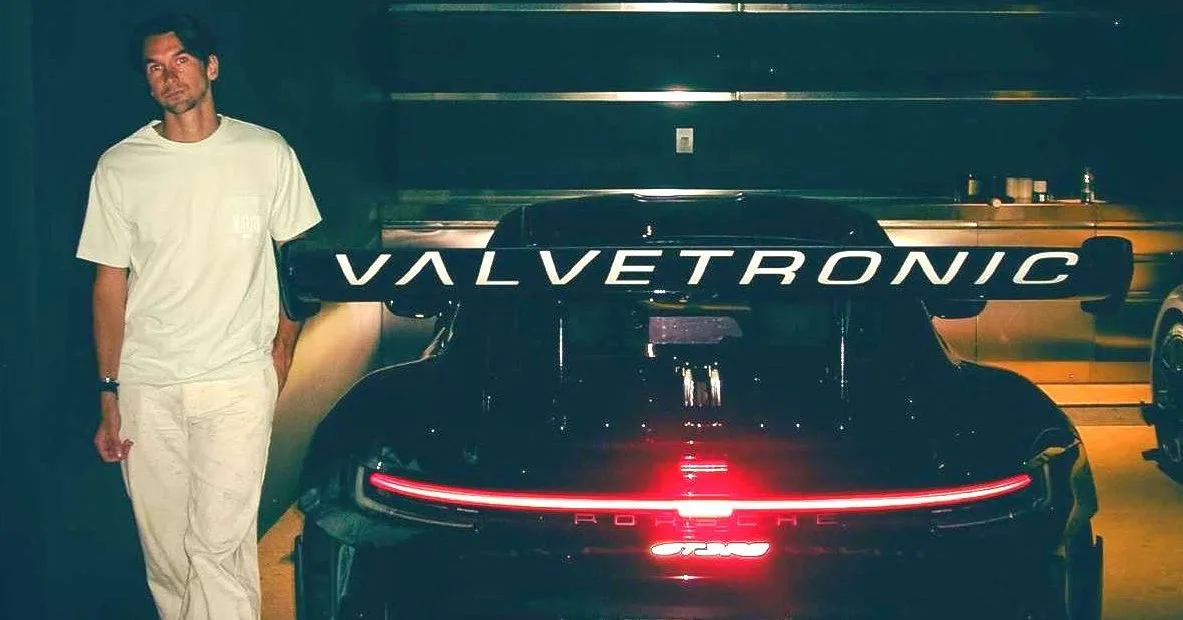
At Free Car Mag we love a success story and they don’t come much better than the founder of Valvetronic. Just in case you wondered, here is the remarkable back story.
Austin Huffman, (@heyafb), is the self-made car obsessive who turned his teenage side hustle into one of the most recognizable automotive performance brands in the world: Valvetronic Designs Exhaust Systems.
At 15, he was running a makeshift detailing business out of his parents’ driveway, charging strangers to park while he cleaned their cars. Within a year, he’d saved enough to buy his dream BMW, then turned it into a rolling business card, modifying it, flipping customers at school, and learning firsthand the difference between who wants the product and who actually pays for it.
The breakthrough came after his mum told him his car was “too loud” to leave the house in the morning. Instead of dialing it back, Austin engineered a better solution, a valved exhaust system that could switch from quiet to aggressive on demand. What started as a DIY fix quickly turned into Valvetronic Designs (@valvetronic), now one of the most recognizable exhaust brands in the world, helping redefine how an entire generation experiences performance cars.
We wanted to talk to Austin about all this and maybe get some top tips and he very kindly spared us some of his precious time, you are going to like what he said, because obviously Austin is one of us!
What made you want to be so ambitious so young? Did your family and friends set a great example or give good advice?
I think at a pretty young age I realized that I could build an identity for myself by creating something and providing value to people. In high school, I wasn’t the cool kid. I was just the kid who was really, really into cars. I wasn’t getting invited to all the parties or going out drinking with the fellas, so honestly, I had a lot of free time. I had to figure out something to do with myself.
That started with detailing cars around my neighborhood, working on people’s cars and basically figuring out different ways I could make some money doing something I already loved. And then I noticed something interesting. Once I started knowing things about cars, making some money and actually being useful to people, the way people looked at me changed. Suddenly people wanted me around because I had something to offer. I knew something. I could help them with something.
I think that had a huge impact on me. I realized that if I didn’t feel like I naturally had an identity or a place, I could go engineer one for myself. I could make myself valuable. My family definitely played a role too. Both my mom and dad are very high-performing people who have always been heavily invested in their work and their passions. My sister is the same way professionally. So I definitely had people around me who showed me what working hard actually looked like.
But I think the real fire came from that younger version of myself realizing, “Okay, maybe I’m not the guy getting invited to everything, but I can become really good at something.” For me, that something was cars**.**
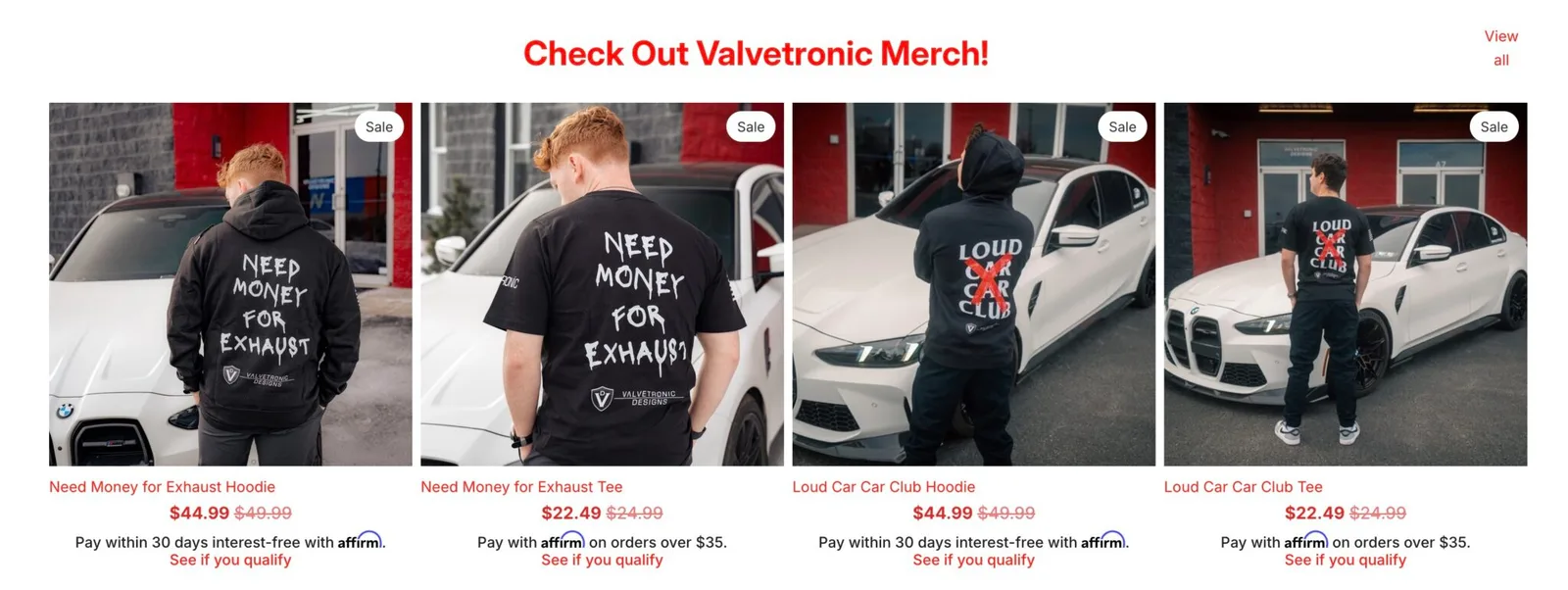
Your products make cars perform better. Why don’t manufacturers improve their designs?
Ultimately, a lot of it comes down to money and regulations. BMW, Porsche, Mercedes, whoever they’re for-profit companies building hundreds of thousands or millions of cars. They’re not sitting there saying, “How do we make this the greatest sounding exhaust system humanly possible?” That’s not really their job.
Their exhaust has to work. It has to pass emissions. It has to pass sound regulations in a bunch of different countries. It has to survive warranty periods. It has to be manufacturable at scale, and it has to hit a certain cost. And modern exhaust systems have gotten insanely complicated. You have primary cats, secondary cats, particulate filters on certain cars, valves, sensors, decibel restrictions and all this other stuff that has to be packaged underneath the car.
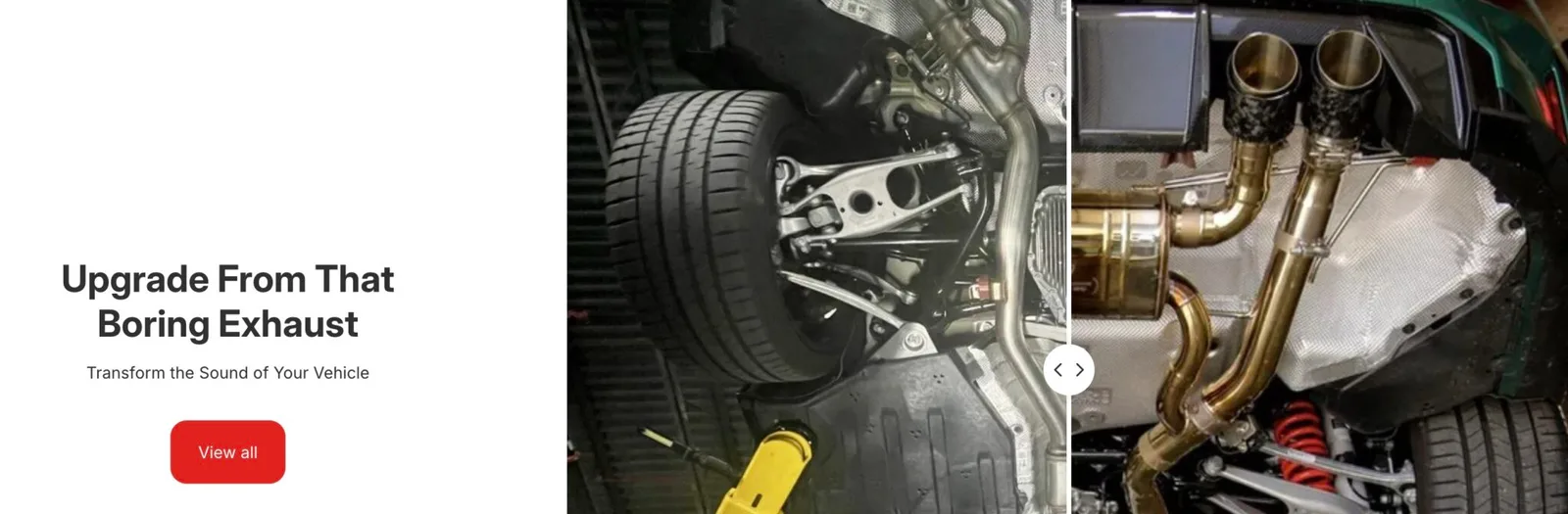
So by the time the manufacturer has satisfied all of that, making the exhaust an amazing emotional experience isn’t necessarily at the top of the list. They also know that the vast majority of their customers aren’t going to modify the car anyway. And the small percentage of crazy people like us who do care about making the car louder, lighter or more exciting are probably going to go into the aftermarket regardless. That’s where we come in. We don’t have to make the exhaust for every person buying the car. We’re making it for the enthusiast who gets in their car, starts it up and wants to feel something. And with the valved systems, you get both personalities. You can make the thing absolutely ridiculous when you want it to be, and then hit a button, close the valves and go home without your neighbors hating you.
Tell us about the best, fun affordable car that your products will improve.
I’m extremely blessed that I have some really cool and expensive cars, but weirdly enough, those aren’t always the cars that give me the most enjoyment. There are two cars I always come back to.
The first is my 1995 Mazda Miata. I’ve had that thing for about seven years now. I bought it in college when I had basically no money, originally because I figured I could teach people how to drive manual with it and make a little extra cash. I’ve put something like 50,000 miles on it since then. That car has been a daily driver. I’ve gotten it stuck in the snow. I’ve beaten the crap out of it. I’ve learned how to work on cars with it. I’ve broken things and figured out how to fix them. It basically taught me not to be scared of a car having a problem.
And it has one of our original universal Valvetronic mufflers on it that’s been there for about seven years. The crazy thing is it still works perfectly. The valve works, the controller works, the muffler works. And this is on a Miata that gets driven basically at full throttle everywhere because that’s how you drive a Miata. The thing spits flames and gets ridiculously hot, and the exhaust has just taken the abuse.
I love that because that’s what I want Valvetronic quality to mean. Put the thing on the car, beat the hell out of it and years later it should still work. The other one is my 2007 Porsche Boxster. Base car, 2.7-liter, five-speed manual. I paid around $10,000 for it. The convertible top doesn’t work. It needed mechanical work. We’ve done some suspension stuff, brakes and a few other little things, and obviously it has our full Valvetronic RSR exhaust on it.
With the valves open, it’s excruciatingly loud and hilarious. Close them and it’s totally manageable. But my favorite part about that car is that it’s really not that fast. You can floor it. You can work through the gears. You can feel the steering, feel the brakes, feel the chassis moving around underneath you, and you can actually enjoy the entire car without immediately doing 150 mph.
I think sometimes we get way too obsessed with horsepower and numbers in the car world. There’s something wonderful about using 100% of a slower car instead of 20% of a supercar. Both the Miata and the Boxster remind me that the whole point is to have fun.
What car are you driving at the moment and why do you enjoy driving it?
Funny enough, as I’m writing this, I drove my Tesla Model S Plaid into the shop today. I’m a fan of all cars. I genuinely mean that. I can appreciate a Toyota Prius as much as I can appreciate a Bugatti Veyron. People hear that and think it’s ridiculous, but every car was engineered for a purpose. A Prius isn’t supposed to be a McLaren F1. If you get into a Prius and complain that it doesn’t feel like a McLaren F1, you’re kind of missing the entire point of the Prius. Same thing with the Tesla. My life is extremely busy. We’re constantly working on new products, engineering things, scaling the company, dealing with problems and trying to make everything better. So if I can get into my Tesla for my 30-minute commute and have the car take a huge amount of the driving workload off me while I take a phone call or just decompress for a minute, that’s fucking awesome.
That’s what that car is supposed to do for me. Then another day I might get into something with a manual gearbox where I want to hear every mechanical noise and be completely involved in driving it. I don’t think those things contradict each other at all. I love the automobile as a concept. I love the engineering. I love understanding why somebody built something the way they did.
A Tesla Model S and a McLaren F1 couldn’t be more different, but both are incredibly significant cars when you understand what they were trying to accomplish. I think being able to enjoy all of it makes being a car enthusiast a lot more fun.
Do you have any tips for young entrepreneurs?
My biggest advice is probably: be a little delusional and don’t be afraid to fail. You almost have to be. If somebody sat you down before starting a business and showed you every single problem you’re going to deal with over the next five or ten years, you might say, “Yeah, actually, forget that.”
You don’t know what you don’t know, and sometimes that’s a gift. One thing I’ve noticed from talking to people starting businesses is that you can usually tell when somebody is on their first business because they’re completely obsessed with the product. It’s all about the thing they’re selling. Once you’ve done it for a while, you realize the product is only one piece of it. The real business is the process.
How do you manufacture it? How do you get it here? How much inventory do you hold? How do you market it? How do you answer the customer when something goes wrong? How do you hire people? How do you manage cash? How do you make sure the same thing happens correctly 1,000 times instead of just once?
That’s the business. And if you’re young and you’re sitting there waiting until you have every answer before you jump, you’re never going to jump. There’s always going to be another reason not to do it. Eventually you get to the edge and it’s uncomfortable and you’re thinking, “I don’t know if I can actually pull this off.” That’s when you jump. Then you start figuring out the puzzle pieces on the way down.
That’s where the delusion comes in. You have to have this slightly irrational belief that somehow you’re going to figure it out. Not that nothing can go wrong. Everything will go wrong. You just have to believe you’re going to figure out what to do when it does.
What does the future hold for Valvetronic?
The goal hasn’t really changed: I want Valvetronic to be the greatest exhaust company in the world. I want it to be a household name in the automotive industry, and I think we’re already very well on our way there. We’re expanding operations, we’re getting into a ton of new vehicles and we’re investing more into engineering, manufacturing, quality and everything behind the scenes that allows us to keep growing.
I want somebody to buy a car, decide they want to modify it and immediately think, “Let’s see what Valvetronic makes for it.” That’s where I want this company to go. But as we’ve grown, I’ve realized that what excites me isn’t only the cars or the products anymore.
It’s the company itself and the people inside it.
We have more than 50 people working toward this now. I want these people to have the greatest work experience they’ve ever had. I want them to know that if they take care of Valvetronic, Valvetronic is going to take care of them. That’s really important to me. Because when I started this thing, it was basically me trying to figure out how to make some money messing around with cars.
Now there are people’s careers and families connected to what we’re building. That’s cool, but it’s also a huge responsibility. I want Valvetronic to last forever. We’re engineering the company to be that kind of endeavor.
We’re also going to keep fighting for the automotive hobby itself. Regulations are changing, cars are changing and the world around the enthusiast community is changing. I want us involved in sensible legislation and making sure people can continue modifying, driving and enjoying cars.
At the end of the day, we’re a bunch of people who really love cars. I never want us to lose that. https://valvetronic.com/
Thank you Austin for taking the time to talk to Free Car Mag.